
What's Happening?
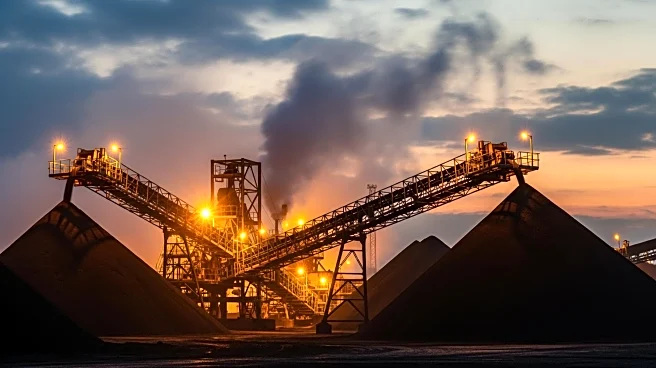
China's coal production reached a record high in 2025, with output totaling 4.83 billion metric tons, a 1.2% increase from the previous year. This surge in production was driven by lower domestic coal prices,
prompting buyers to reduce imports and increase stockpiling of cheaper local supply. The National Bureau of Statistics reported that the rise in output was tempered by regulatory efforts to curb production growth. The increased domestic supply marks a shift from the coal and power shortages experienced in previous years, allowing power plants to source higher quality coal. Despite the annual increase, December's output saw a 1% decline compared to the previous year, as authorities imposed production curbs to prevent prices from falling too low.
Why It's Important?
The record coal output in China has significant implications for global energy markets and environmental policies. The increased domestic production reduces China's reliance on coal imports, impacting international coal exporters. This shift could lead to changes in global coal prices and trade dynamics. Additionally, the focus on higher quality coal and increased washing ratios may improve efficiency and reduce emissions, aligning with China's environmental goals. However, the continued reliance on coal poses challenges for global climate change efforts, as coal remains a major source of carbon emissions. The situation underscores the complex balance between energy security, economic growth, and environmental sustainability.
What's Next?
Looking ahead, China's coal production may continue to expand in 2026, depending on regulatory actions regarding production limits. The government's approach to managing coal output will be crucial in determining future supply and price stability. As China navigates its energy transition, the role of coal in its energy mix will be closely watched by international stakeholders. The country's ability to balance domestic energy needs with environmental commitments will influence global climate policies and energy markets. Additionally, advancements in clean coal technologies and alternative energy sources could shape the future of China's energy landscape.