







What's Happening?
Dr. Chris Cappetta, DDS, a dentist in San Antonio, Texas, is providing guidance on various alternatives to Continuous Positive Airway Pressure (CPAP) therapy for obstructive sleep apnea (OSA) patients. While CPAP remains the standard, many patients struggle
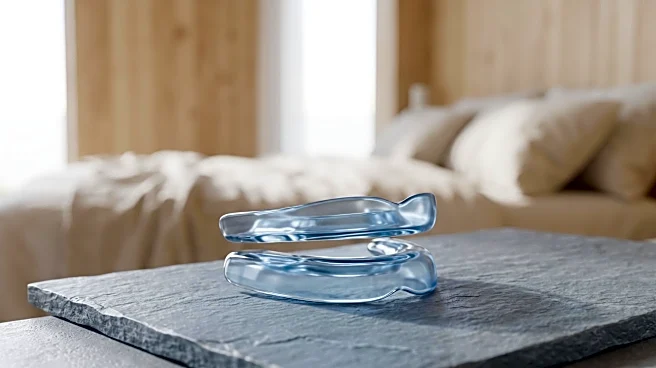
with its use due to discomfort, noise, or inconvenience. Dr. Cappetta emphasizes that the suitability of alternatives depends heavily on the severity of the patient's sleep apnea, as determined by their apnea-hypopnea index (AHI). Options discussed include oral appliance therapy, laser treatment of the soft palate, arch expansion appliances, hypoglossal nerve stimulation, palatal implants, and lifestyle changes such as weight management and alcohol reduction. Dental treatments like oral appliance therapy and laser treatment are typically suitable for mild to moderate OSA, while more severe cases may require surgical interventions like hypoglossal nerve stimulation, which is performed by a surgeon.
Why It's Important?
The discussion around CPAP alternatives is crucial for improving treatment adherence and overall health outcomes for the millions of Americans suffering from obstructive sleep apnea. Many patients abandon CPAP therapy, leaving their condition untreated and increasing their risk for serious health complications. By clearly outlining the various options and their applicability based on OSA severity, Dr. Cappetta's approach empowers patients to make informed decisions. This personalized guidance helps prevent patients from pursuing ineffective treatments and ensures they receive appropriate care. It also highlights the multidisciplinary nature of sleep apnea treatment, involving dentists, physicians, and surgeons, and underscores the importance of a thorough sleep study and anatomical evaluation before selecting a treatment path. This comprehensive approach can lead to better patient satisfaction and more consistent management of OSA.
What's Next?
Patients considering CPAP alternatives are advised to first consult with their prescribing physician and bring their most recent sleep study results to a dental consultation. This initial step is critical for determining the severity of their sleep apnea and ruling out any contraindications for certain treatments. An airway examination will also be conducted to assess anatomical factors. Based on these evaluations, Dr. Cappetta or other specialists will recommend the most appropriate treatment, which could range from dental appliances to referrals for surgical options. Some patients may even find that a combination of treatments, such as continuing CPAP with an added dental appliance, is most effective. The emphasis is on a tailored approach to ensure that the chosen alternative effectively manages the patient's OSA.
Beyond the Headlines
The ongoing search for effective and tolerable sleep apnea treatments reflects a broader challenge in healthcare: balancing efficacy with patient quality of life. While CPAP is medically effective, its practical limitations for many users underscore the need for diverse therapeutic options. This situation drives innovation in medical devices and treatment protocols, pushing for solutions that are less intrusive and more adaptable to individual lifestyles. The conversation also touches upon the economic implications of untreated sleep apnea, including increased healthcare utilization and reduced productivity. By expanding the range of accessible and acceptable treatments, there's potential to significantly reduce the societal burden of OSA, improve public health, and enhance the overall well-being of affected individuals, fostering a more proactive and patient-centric healthcare system.