






What's Happening?
Nomadic herders in Mongolia are increasingly utilizing the Hunu app, which integrates GPS trackers and artificial intelligence-based weather updates, to manage their livestock. This technological adoption is a direct response to the severe environmental
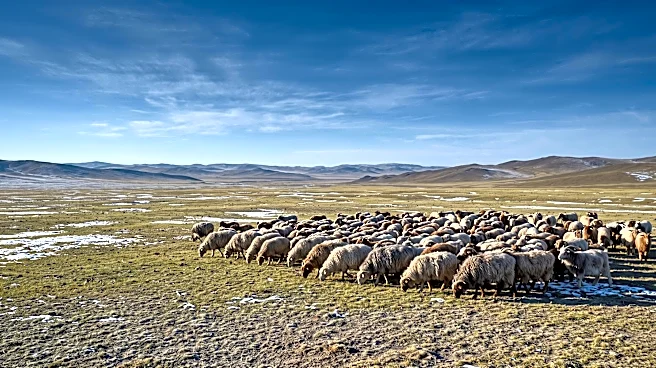
challenges posed by droughts, dust storms, and extreme cold, including events like the 2024 dzud, which saw temperatures plummet to minus 45 degrees Celsius and resulted in the loss of over eight million head of livestock. The Hunu app provides critical data such as snow depth, wind direction, soil moisture, and drought conditions, alongside AI-powered alerts for dust storms and blizzards. This information enables herders to make informed decisions on where to move their herds, as demonstrated by herder Ganchimeg, whose husband located a stray flock near a salt lake in time to prevent potential fatalities. The solar-powered GPS devices are attached to a single animal within a herd, leveraging the natural tendency of herds to stay together on steppe pastures. The app's founder, Bilgudei Gankhulug, was motivated by the devastating impact of extreme weather on herders' livelihoods and aims to expand Hunu's reach to other Central Asian countries.
Why It's Important?
The adoption of GPS and AI technology by Mongolian herders signifies a crucial adaptation strategy in the face of escalating climate change impacts. This initiative is particularly important for the approximately one in four Mongolian residents who rely on nomadic herding for their livelihood. With nearly 82% of Mongolia's territory affected by land degradation and desertification, traditional herding practices are becoming increasingly unsustainable. The Hunu app provides a vital tool for mitigating the economic and social consequences of extreme weather events, which have historically led to massive livestock losses and subsequent financial ruin for herding families. By offering real-time environmental data and predictive weather insights, the technology empowers herders to proactively protect their assets and sustain their way of life. This model could serve as a blueprint for other pastoral communities globally facing similar environmental pressures, highlighting the potential of technology to support traditional economies in vulnerable regions. The expansion of Hunu to other Central Asian countries, as envisioned by its founder, underscores the broader relevance and potential impact of such solutions on a regional scale.
What's Next?
Bilgudei Gankhulug, the founder of the Hunu app, plans to expand its services to other Central Asian countries, indicating a potential for broader regional adoption of this technology. Discussions have already taken place with herders from Tanzania and Uruguay during the COP17 conference on combating desertification, suggesting international interest in replicating Mongolia's experience. This expansion could lead to a more widespread integration of AI and GPS in nomadic livestock management across various regions susceptible to climate-related challenges. Further development of the app may include additional features or data points to enhance its utility for herders. The success of Hunu in Mongolia could also inspire other technological innovations aimed at supporting traditional livelihoods in the face of environmental degradation. Continued monitoring of the app's effectiveness in mitigating livestock losses and supporting herder communities will be crucial for its long-term development and adoption.
Beyond the Headlines
The integration of advanced technology like GPS and AI into traditional nomadic herding practices in Mongolia represents a significant cultural and economic shift. It highlights the tension and synergy between ancient ways of life and modern solutions, as herders adapt to environmental changes that threaten their ancestral practices. This development also raises questions about data privacy and accessibility for remote communities, as well as the potential for digital divides within nomadic populations. The reliance on technology for survival could alter social structures and decision-making processes within herding communities. Furthermore, the initiative underscores the global challenge of desertification and overgrazing, as highlighted by the World Wildlife Fund, and how localized technological interventions can contribute to broader conservation efforts by promoting more sustainable grazing patterns. The interest from other countries suggests a growing recognition of the need for innovative, context-specific solutions to support vulnerable populations impacted by climate change.