






What's Happening?
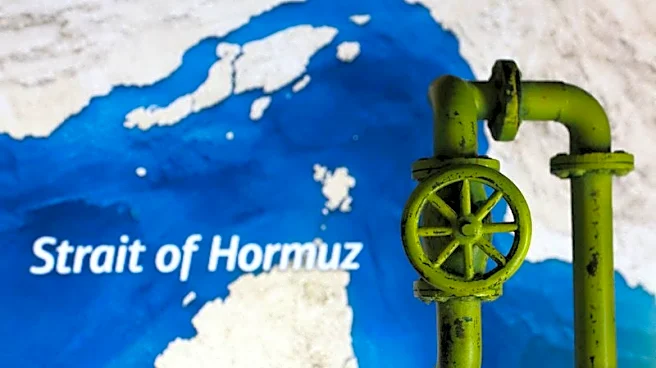
The U.S. Central Command has announced a blockade of the Strait of Hormuz following the failure of the U.S. and Iran to reach a peace agreement. This strategic move comes as tensions between the two nations escalate, with the blockade set to begin on Monday.
The decision is part of a broader strategy by the U.S. to exert pressure on Iran, as the ongoing conflict has led to rising gas and food prices, impacting the American economy.
Why It's Important?
The blockade of the Strait of Hormuz is a significant geopolitical development, as this waterway is a critical chokepoint for global oil shipments. The U.S. action could lead to disruptions in oil supply, potentially causing further increases in energy prices. This move may also escalate tensions in the region, affecting international relations and economic stability. The blockade underscores the complexities of U.S.-Iran relations and the broader implications for global trade and security.
What's Next?
The international community will be closely monitoring the situation, as the blockade could provoke responses from Iran and other nations dependent on oil shipments through the Strait of Hormuz. Diplomatic efforts may intensify to resolve the conflict and prevent further economic repercussions. The U.S. government may face domestic pressure to address the economic impact of the blockade, particularly if energy prices continue to rise.