


What's Happening?
A recent letter to the editor in the Los Angeles Times discusses the potential benefits of reinstating federal support for various programs in California. The letter responds to an op-ed by Joel Kotkin, which criticized California's handling of issues
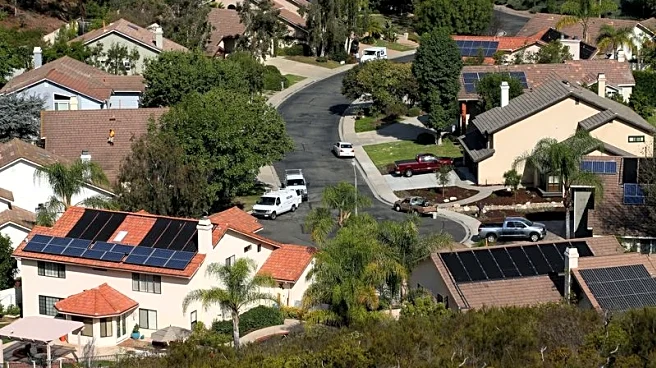
affecting Latinos and other minorities. The writer, Robert Davis, argues that California could improve conditions for all residents if federal funds were restored to support public radio, rural libraries, healthcare, housing, and childcare. Davis also highlights the irony of a Texas-funded study criticizing California's energy prices, referencing past energy crises like Enron. Another letter by Karl Reitz addresses the high cost of electricity in California, attributing it to wildfires and aging infrastructure rather than solely to climate policies. Reitz defends Governor Gavin Newsom's climate initiatives, suggesting they are necessary to address the health impacts of fossil fuels on poorer populations.
Why It's Important?
The discussion around federal support and state policies in California is significant as it touches on broader themes of economic equity and environmental responsibility. Reinstating federal support could provide much-needed resources for essential services, potentially improving living conditions for minorities and low-income groups. The debate over energy costs and climate policies also reflects ongoing tensions between economic and environmental priorities. As California grapples with the impacts of climate change, the state's approach could serve as a model or cautionary tale for other regions. The letters highlight the complex interplay between state and federal responsibilities in addressing social and economic challenges.
What's Next?
If federal support is reinstated, California could see an influx of resources to bolster public services, potentially leading to improved outcomes for minorities and economically disadvantaged groups. The state may continue to face scrutiny over its energy policies, especially as it balances climate goals with economic impacts. Stakeholders, including policymakers and community advocates, may push for more comprehensive strategies that address both environmental and social equity concerns. The ongoing dialogue could influence future legislative actions and public opinion on the role of government in supporting vulnerable populations.