



What's Happening?
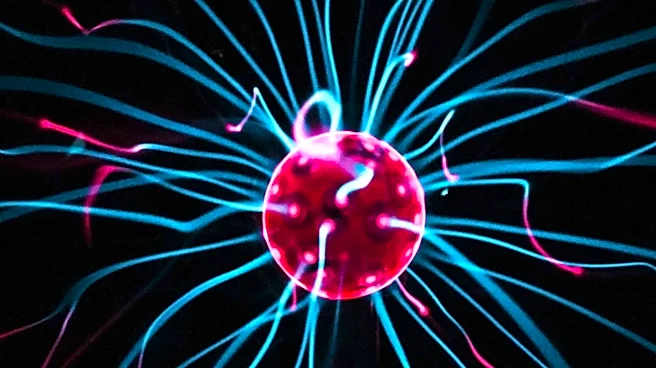
Ball lightning, a rare and mysterious atmospheric phenomenon, has been observed and reported for centuries, often appearing as glowing orbs during thunderstorms. These orbs can range from pea-sized to several meters in diameter and are known to drift
through the air for extended periods before disappearing or exploding. Historical accounts include a 1638 incident in Devon where a fireball caused fatalities in a church. In 2014, researchers in China captured the first optical spectrum of ball lightning, revealing elements such as silicon, iron, and calcium, supporting the theory that these orbs may form from vaporized soil elements during lightning strikes.
Why It's Important?
Understanding ball lightning is significant for both scientific research and public safety. The phenomenon's unpredictable nature and potential for causing harm make it a subject of interest for atmospheric scientists. Insights into its formation could enhance knowledge of electrical and atmospheric processes, potentially leading to improved safety measures during thunderstorms. Additionally, the study of ball lightning contributes to the broader field of plasma physics and could have implications for energy research. Public fascination with this rare phenomenon also highlights the importance of continued scientific inquiry and the need for reliable data to demystify natural occurrences.