






What's Happening?
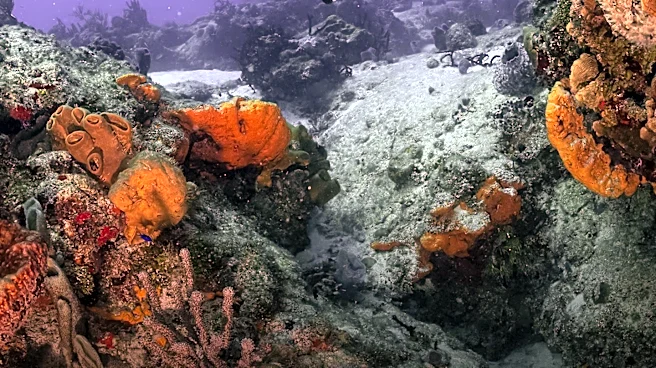
A coral reef off the coast of West Africa, long presumed dead, has been rediscovered teeming with life. Initially identified in the 1960s during surveys for fishing areas, the reef was thought to be dead. However, recent sonar surveys have revealed a healthy
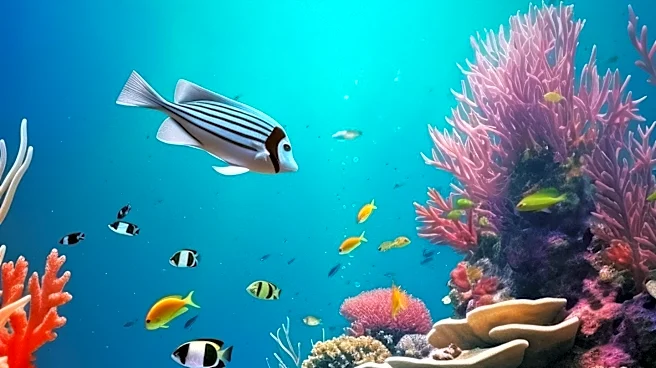
reef structure, described in the journal Frontiers in Marine Science. The research team, led by Gérard Zinzindohoué from the Institute of Halieutic and Oceanographic Research in Cotonou, Benin, used modern technology, including an underwater drone and the Deep Sea Camera System, to confirm the presence of the reef. The discovery includes eight types of coral and various fish species, suggesting a mesophotic coral ecosystem, which thrives in deeper, less light-exposed waters. This finding raises questions about the historical state of the reef and its potential recovery, highlighting the need for further research into coral resilience in changing climates.
Why It's Important?
The rediscovery of this coral reef is significant as it challenges previous assumptions about the reef's demise and suggests potential resilience in coral ecosystems. This finding is crucial for understanding how coral reefs can adapt to environmental changes, including climate change. The presence of a healthy reef in an area previously thought to be barren could inform conservation strategies and highlight the importance of protecting and studying mesophotic coral ecosystems. These ecosystems are less understood than their shallow counterparts, and their study could provide insights into the broader health of marine environments and the impacts of climate change.
What's Next?
Further research is needed to confirm the species present and understand the reef's history and resilience. The research team plans to conduct more detailed studies, potentially involving scientific diving and sampling programs, to gather more data on the reef's condition and its ecological significance. This could lead to a better understanding of how such ecosystems can be preserved and the role they play in marine biodiversity. The findings may also prompt further exploration of other potential reefs in the region, contributing to a more comprehensive understanding of West Africa's coastal marine environments.