




What's Happening?
Congressman Michael Rulli and Senator Jon Husted have announced a significant federal grant of $21 million for the construction of a railroad overpass in Salem, Ohio. This funding aims to address long-standing traffic congestion and safety concerns at the South
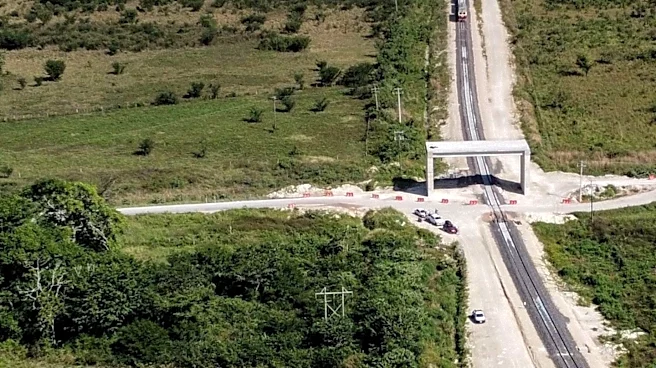
Lincoln Avenue crossing, which is a primary entry point into Salem. The project will build a bridge over the tracks, allowing trains to pass underneath without disrupting vehicle traffic. Currently, the crossing experiences 40 to 60 trains daily, causing average delays of 5.5 minutes per train and forcing emergency vehicles to take lengthy detours. Salem Mayor Cyndi Dickey highlighted the daily traffic backups and the critical need for this infrastructure improvement. The total project cost is estimated at $27 million, with the State of Ohio and Columbiana County Commissioners also contributing, while Salem's contribution will be minimal, approximately $250,000. The overpass is projected to be completed and operational by 2030, with final plans still being developed, including property acquisitions and potential road rerouting.
Why It's Important?
This federal funding is crucial for enhancing public safety and economic efficiency in Salem, Ohio. The current railroad crossing poses significant risks, particularly for emergency services, as police, fire, and EMS stations are located north of the tracks, while the only hospital in northern Columbiana County is to the south. Delays caused by passing trains can impede critical response times, potentially endangering lives. Economically, the constant traffic backups disrupt daily commutes for approximately 4,500 vehicles, including school buses, and hinder local businesses by creating accessibility issues. The new overpass will alleviate these delays, improve traffic flow, and reduce fuel consumption from idling vehicles. Congressman Rulli emphasized the project's importance for his hometown, noting its role in strengthening public safety and driving economic growth across the region. Senator Husted also underscored the benefits for residents, local businesses, and emergency responders, highlighting the investment's role in making life safer and easier for Ohioans.
What's Next?
The immediate next steps for the Salem railroad overpass project involve finalizing the engineering plans, conducting geological studies, and acquiring necessary properties. Salem Mayor Cyndi Dickey indicated that while the bridge is expected to be ready by 2030, the start date for construction is yet to be determined. Property acquisitions will include an auto service building and potentially a plaza near the tracks, which will need to be bought and demolished. Additionally, a historical sign will be relocated, and Chestnut Grove Road may require rerouting. The successful execution of these preliminary phases will be critical for keeping the project on schedule. Local officials, including Columbiana County Engineer Bert Dawson, who has advocated for this bridge for decades, will continue to collaborate with state and federal partners to ensure a smooth progression. The community will likely see ongoing updates regarding property negotiations and construction timelines as the project moves forward.
Beyond the Headlines
The approval of this federal funding for Salem's railroad overpass reflects a broader national emphasis on infrastructure modernization and safety improvements, particularly in areas impacted by aging transportation networks. This project exemplifies how targeted federal investments can address specific local challenges with significant regional benefits. Beyond the immediate relief from traffic congestion and enhanced safety, such infrastructure developments can stimulate local economies by improving logistical efficiency for businesses and making the area more attractive for future investment. It also highlights the collaborative efforts between federal, state, and local governments to secure funding for critical projects. The long-term impact could include reduced accident rates at the crossing, improved air quality due to less idling traffic, and a more resilient local transportation system. This initiative could serve as a model for other communities facing similar infrastructure deficits, demonstrating the tangible benefits of sustained advocacy and inter-governmental cooperation.