





What's Happening?
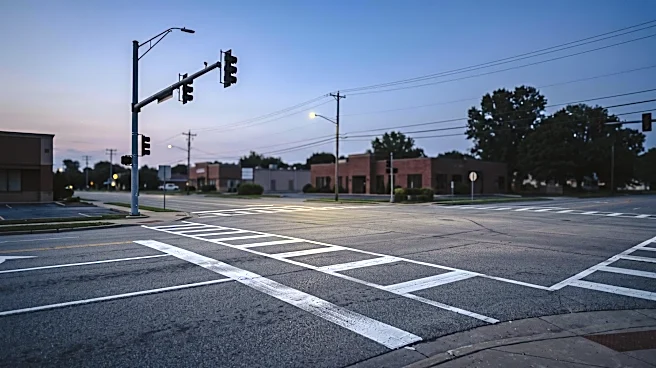
A citywide upgrade to LED streetlights in Newark, New Jersey, initially led to a significant reduction in nighttime violent crime, according to a study by Rutgers-Newark. The research, published in the Journal of Quantitative Criminology, found that violent crime decreased
by approximately 46% in the first six months following the installation of over 1,500 LED fixtures between 2019 and 2021. This decline was primarily driven by a reduction in aggravated assaults and robberies. However, the study also revealed that this positive effect was not sustained, as the reduction in crime disappeared after two quarters. Researchers suggest that people may adapt to the new lighting conditions over time, or that streetlight equipment may degrade, leading to less effective illumination. The study, which is unique for its citywide scope, found no evidence that crime was displaced to other areas. The Newark Public Safety Collaborative, in partnership with the Mayor's Office, worked with PSE&G, Rutgers-Newark researchers, city residents, and public safety officials to identify high-crime areas for the lighting improvements.
Why It's Important?
This study provides crucial empirical evidence on the short-term effectiveness of environmental design interventions, specifically improved street lighting, in reducing violent crime. While the initial 46% drop in crime is substantial, the fading effect highlights a critical limitation: lighting alone is not a permanent solution for crime prevention. This finding is important for urban planners and policymakers, as it suggests that investments in infrastructure like LED streetlights must be coupled with ongoing community programs and comprehensive public safety strategies to achieve lasting results. The study's citywide approach offers a more robust understanding compared to previous localized studies, making its conclusions more broadly applicable to other urban environments. The lack of crime displacement is also a significant finding, alleviating concerns that such interventions merely shift criminal activity rather than reducing it overall. This research underscores the need for multi-faceted approaches to public safety that integrate environmental changes with social and community-based initiatives.
What's Next?
The findings from the Rutgers-Newark study suggest that future public safety initiatives in Newark and other cities should integrate LED streetlight upgrades with complementary community programs. Alejandro Gimenez-Santana, head of the Newark Public Safety Collaborative, emphasized that street lighting should be part of a wider public safety approach that includes community-led cleanups, violence interruption efforts, neighborhood engagement, and coordination among public safety partners. The Newark Public Safety Collaborative, which studies crime clusters and shares data with community organizations, city government, and law enforcement, will likely continue to advocate for and implement these integrated strategies. The research will be valuable for scholars and practitioners interested in evidence-based crime prevention, potentially influencing future urban planning and public safety policies. Cities considering similar streetlight upgrades will need to factor in the transient nature of the crime reduction effect and plan for sustained community engagement to maintain safety gains.
Beyond the Headlines
The study's revelation that the crime-reducing effect of LED streetlights faded after six months points to a deeper psychological and sociological phenomenon: human adaptation. While initial changes in the environment can disrupt criminal behavior, both offenders and residents eventually adjust to new conditions. This highlights the dynamic nature of crime and the need for adaptive, evolving prevention strategies. The research also implicitly calls for a re-evaluation of how cities invest in public safety, moving beyond single-solution approaches to more complex, community-driven models. The collaboration between PSE&G, Rutgers-Newark, city residents, and public safety officials exemplifies a holistic approach to urban problem-solving, where diverse stakeholders contribute to understanding and addressing complex issues. This study contributes to the broader discourse on crime prevention through environmental design, emphasizing that physical changes must be supported by social interventions to create truly safe and resilient communities.