
What's Happening?
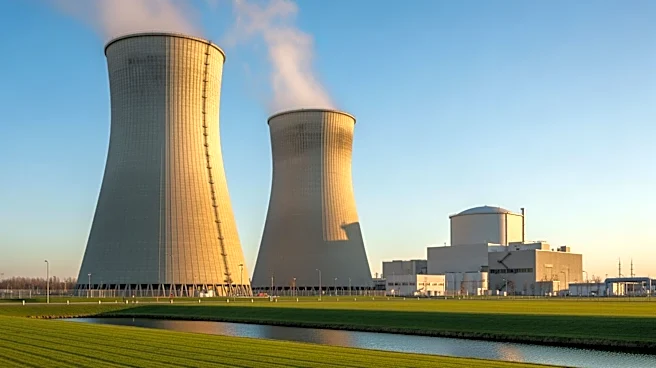
The U.S. Nuclear Regulatory Commission (NRC) has granted a 20-year extension to the operating license of California's Diablo Canyon Power Plant. This decision allows the plant, operated by Pacific Gas and Electric Co. (PG&E), to continue functioning into
the 2040s, contingent upon state legislative approval for operations beyond 2030. The plant, which began operations in 1985, is a significant source of California's electricity, providing about 9% of the state's total and 20% of its emissions-free energy. The NRC's decision follows a comprehensive three-year review process involving multiple state and regional agencies. PG&E had initially planned to retire the plant's units by 2025, but legislative changes in 2022, driven by energy reliability concerns, have extended its operational timeline.
Why It's Important?
The extension of Diablo Canyon's license is crucial for California's energy strategy, particularly in maintaining grid reliability and supporting the state's clean energy goals. As the largest source of clean energy in California, the plant plays a pivotal role in reducing greenhouse gas emissions and stabilizing the power grid. The decision underscores the importance of nuclear energy in the state's transition to a net-zero energy future. Additionally, the plant's continued operation supports local employment, with about 1,300 workers, and contributes significantly to the regional economy. The extension also reflects broader trends in energy policy, where nuclear power is increasingly seen as a necessary component of sustainable energy solutions.
What's Next?
For Diablo Canyon to operate beyond 2030, the California Legislature must approve further extensions, as mandated by a 2022 state law. This legislative decision will be influenced by ongoing assessments of the state's energy needs and environmental goals. PG&E will continue to focus on maintaining high safety and performance standards to justify the plant's extended operation. The broader implications for California's energy policy include potential legislative debates on the role of nuclear power in achieving long-term sustainability and energy security. Stakeholders, including environmental groups and local communities, will likely engage in discussions about the plant's future and its impact on the state's energy landscape.