
What's Happening?
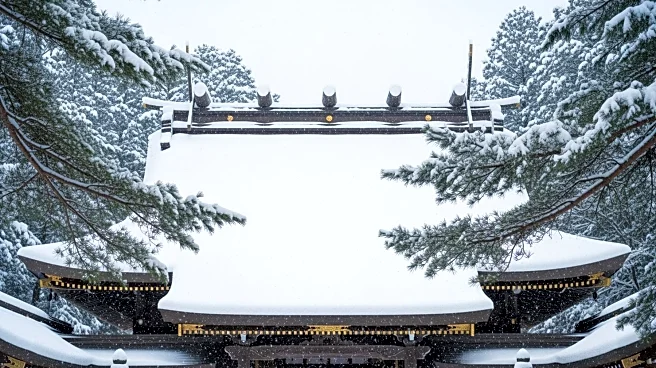
In Kyoto, Japan, over 100 individuals were compelled to seek refuge in the Mitsumine Shrine due to severe snowfall that rendered roads impassable. The local authorities reported that approximately 50 vehicles
were stranded, and their occupants, along with others, took shelter in the shrine's halls and lobbies. Fortunately, no illnesses were reported among those who stayed overnight. The Japan Meteorological Agency has noted that the country is currently experiencing significant snowfall, with forecasts predicting up to 40cm of snow in certain areas on Saturday. This follows a substantial accumulation of up to 80cm of snow over the past 72 hours, as a persistent cold front continues to affect the region.
Why It's Important?
The heavy snowfall in Japan highlights the challenges posed by extreme weather conditions, particularly in regions unaccustomed to such severe winter events. The situation underscores the importance of emergency preparedness and the role of local authorities in ensuring public safety during natural disasters. The incident at the Mitsumine Shrine serves as a reminder of the potential for infrastructure disruptions, such as road closures, which can isolate communities and necessitate emergency sheltering. This event may prompt a reevaluation of disaster response strategies and infrastructure resilience in the face of increasingly unpredictable weather patterns.
What's Next?
As the cold front persists, further snowfall is expected, which could exacerbate the current situation. Local authorities may need to continue monitoring weather conditions closely and provide additional support to affected areas. The incident may also lead to discussions on improving infrastructure to better withstand extreme weather events and ensuring that emergency response plans are robust and effective. Additionally, there may be a focus on enhancing communication strategies to keep the public informed and safe during such occurrences.
Beyond the Headlines
The heavy snowfall in Japan could have broader implications for the country's approach to climate change and disaster management. As extreme weather events become more frequent, there may be increased pressure on the government to invest in climate adaptation measures and infrastructure improvements. This situation also highlights the cultural significance of community spaces like shrines, which can serve as vital refuges during emergencies. The event may prompt a deeper examination of how traditional and modern practices can be integrated to enhance community resilience.