


What's Happening?
The Palestinian Ministry of Foreign Affairs and Expatriates has issued an urgent call to the international community, the United Nations, and humanitarian organizations for immediate and coordinated action to address the escalating humanitarian and environmental
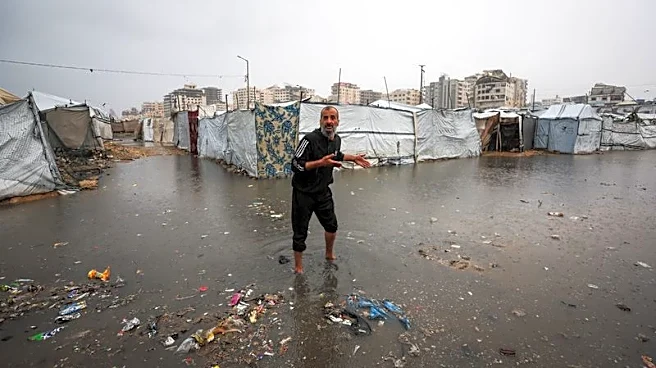
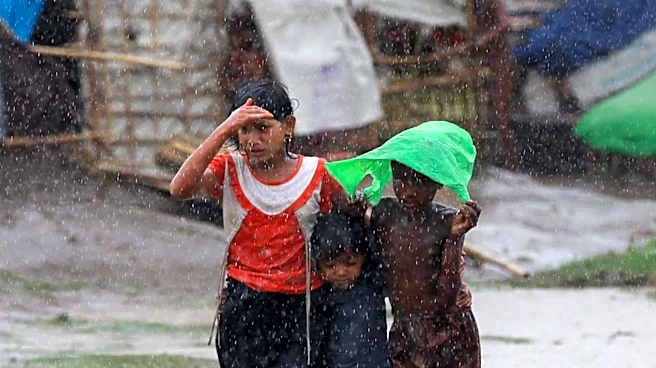
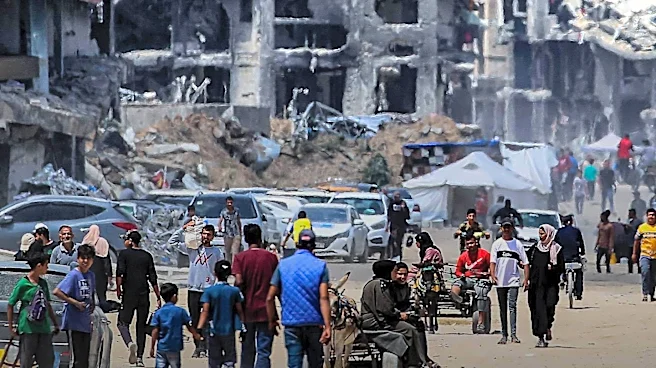
crisis in the Gaza Strip. The ministry warns that the situation, exacerbated by the onset of winter, could lead to a greater catastrophe, particularly affecting children, the elderly, and the sick. Recent rainfall has highlighted the dire conditions, with an estimated two million Palestinians living in approximately 270,000 tents and displacement sites across Gaza. Between 60% and 85% of these tents are reportedly worn out and unfit for use after nearly three years of conflict and forced displacement. Over 400,000 displaced Palestinians are in high-risk areas vulnerable to flooding. The ministry emphasizes that the destruction of infrastructure, especially sewage and rainwater drainage systems, intensifies these risks, while electricity outages and fuel shortages expose residents to life-threatening cold and rainfall.
Why It's Important?
This urgent appeal underscores the severe and rapidly deteriorating humanitarian situation in Gaza, which carries significant implications for regional stability and international humanitarian efforts. The call for immediate pressure on Israel to open all border crossings for unrestricted aid highlights a critical bottleneck in humanitarian response. The potential for widespread disease and further loss of life due to inadequate shelter, lack of medical supplies, and contaminated water could destabilize an already volatile region. The ministry's emphasis on implementing UN Security Council resolutions, including 2720 and 2803, suggests a push for greater accountability and adherence to international law. The crisis also tests the effectiveness of international bodies and their ability to respond to complex humanitarian emergencies, potentially influencing future diplomatic engagements and aid policies in conflict zones.
What's Next?
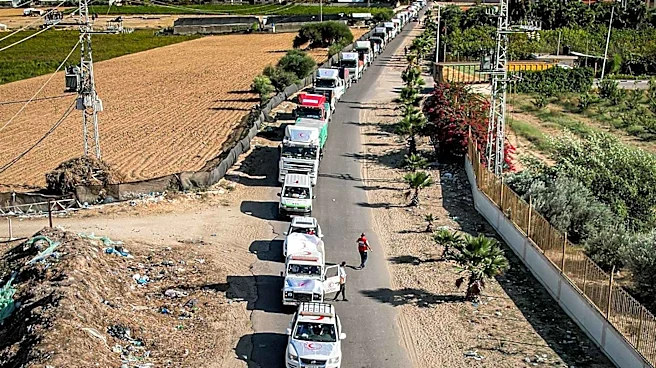
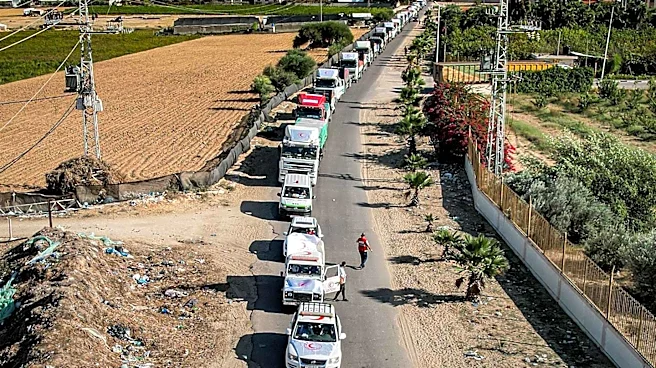
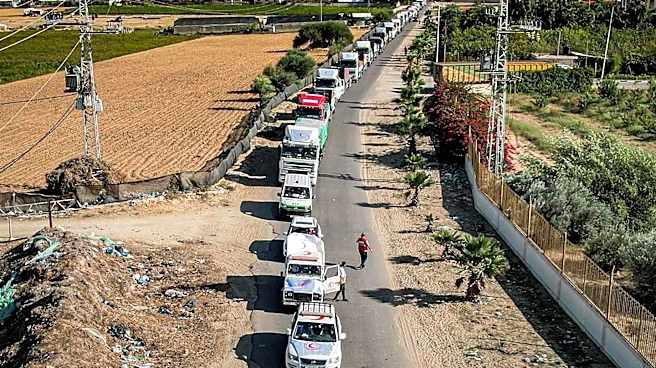
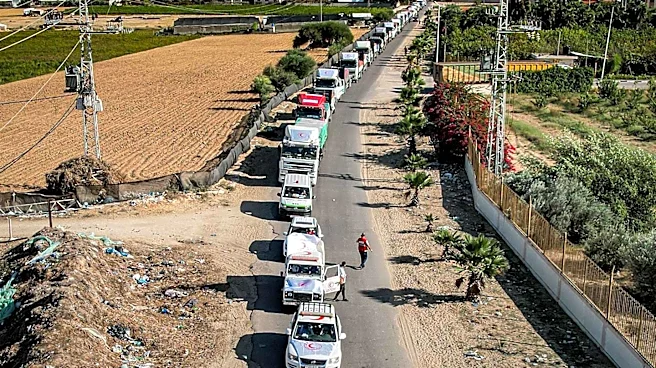
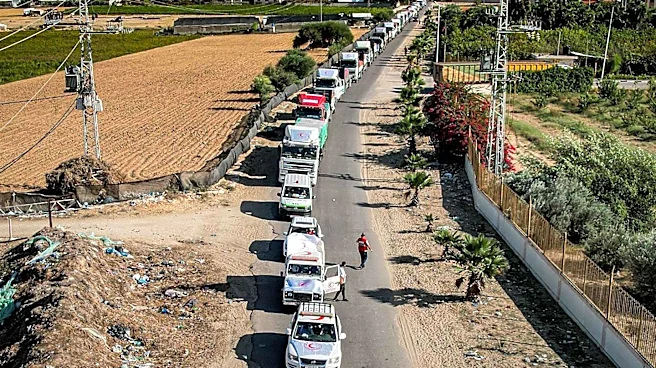
The Palestinian Ministry is urging the international community to move beyond humanitarian appeals and implement concrete measures. This includes immediate pressure on Israel to open all border crossings for humanitarian assistance, ensuring unrestricted entry of aid, fuel, and equipment necessary for water and sewage systems. The ministry also calls for the urgent provision of winter shelter necessities, such as temporary housing, rain-resistant tents, and materials to repair damaged homes. Additionally, there is a demand for winter clothing, blankets, mattresses, and safe heating supplies, particularly for vulnerable populations. An emergency health and preventive response is also sought, including medicines, medical supplies, clean water, and sterilization materials to combat diseases. The mobilization of logistical and technical equipment to support local authorities and relief organizations is also a key next step to protect civilians and displacement sites.
Beyond the Headlines
The crisis in Gaza extends beyond immediate humanitarian needs, touching upon profound ethical and legal dimensions. The prolonged displacement and destruction of infrastructure raise questions about the long-term viability of living conditions for Palestinians in the region. The call for international intervention and adherence to UN Security Council resolutions highlights the ongoing debate about the responsibilities of occupying powers and the enforcement of international humanitarian law. The vulnerability of children, the elderly, and the sick in such conditions underscores the disproportionate impact of conflict on non-combatants. This situation could trigger shifts in international policy regarding aid delivery and protection mechanisms in conflict zones, potentially leading to increased scrutiny of blockades and restrictions on essential supplies. The environmental degradation due to damaged infrastructure also poses a long-term challenge to public health and recovery efforts.