
What's Happening?
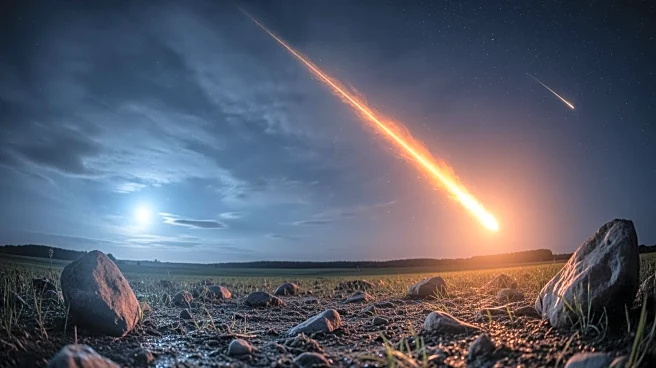
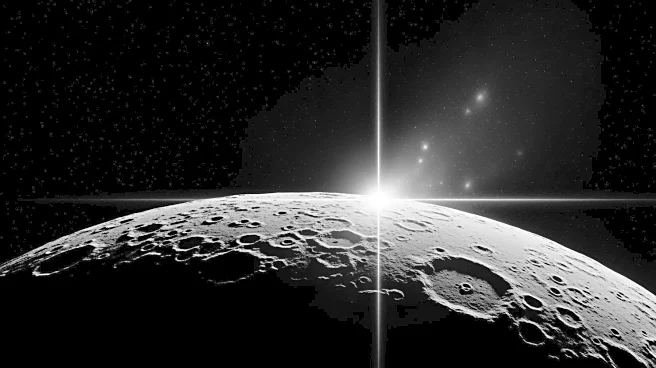
NASA has discovered a significant new impact crater on the Moon, described as a 'once-in-a-century event.' The crater, approximately 225 meters long, was identified through images captured by NASA's Lunar Reconnaissance Orbiter Camera. This discovery
coincides with NASA's ongoing Artemis 2 mission, which aims to return humans to the Moon. The Artemis 2 mission, scheduled for no earlier than April 1, 2026, will carry four astronauts on a lunar loop. The impact event is notable due to its rarity, with scientists estimating such craters form only once every 139 years. The impact has raised concerns about the potential hazards posed by high-velocity debris, which could affect future lunar structures.
Why It's Important?
The discovery of this large impact crater highlights the ongoing geological activity on the Moon and underscores the challenges of establishing a human presence there. The absence of an atmosphere on the Moon means that impacts can eject debris at high speeds, posing risks to any future lunar infrastructure. This event emphasizes the need for robust design in lunar habitats to withstand such impacts. Additionally, the timing of this discovery with the Artemis 2 mission underscores the importance of understanding lunar conditions as NASA prepares for human exploration. The mission's success is crucial for advancing human space exploration and establishing a sustainable presence on the Moon.
What's Next?
NASA's Artemis 2 mission is set to proceed with its planned launch in April 2026, despite previous delays due to technical issues. The mission will involve a 10-day flight around the Moon, marking the first crewed lunar mission in over five decades. As NASA continues its lunar exploration efforts, the agency will likely focus on developing technologies and strategies to mitigate the risks posed by lunar impacts. This includes designing lunar habitats capable of withstanding high-velocity debris and further studying the Moon's surface to better understand its geological activity.