







What's Happening?
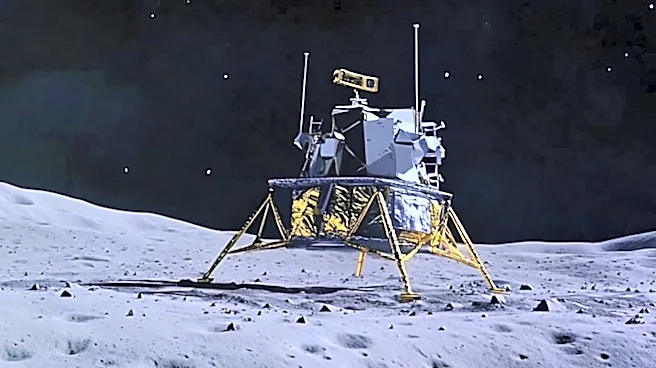
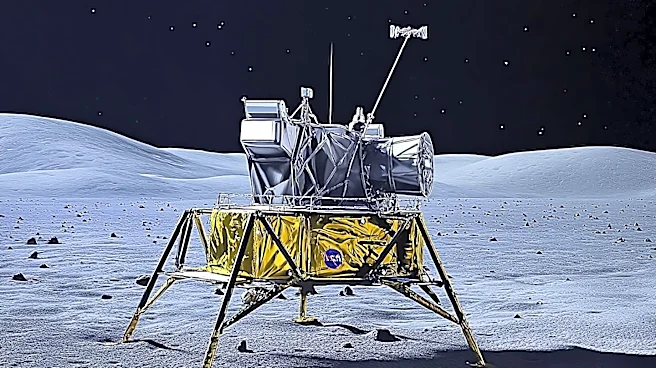
NASA and Draper have mutually agreed to terminate a task order for a lunar lander mission due to significant delays in the spacecraft's development. The task order, part of the Commercial Lunar Payload Services (CLPS) program, was initially valued at $73
million. The decision was influenced by the projected timeline for future milestones, which indicated a potential landing date as late as 2030 or 2031. The mission, which involved sending a lander to the moon's far side with three scientific experiments, faced multiple redesigns and engine changes, contributing to the delays. Despite the termination, NASA remains committed to the scientific objectives of the mission and plans to deliver the developed instruments to the moon through future CLPS landings.
Why It's Important?
The termination of the Draper lunar lander mission highlights the challenges and complexities involved in space exploration and development. This decision underscores the importance of timely project management and the impact of technical delays on mission timelines. For NASA, the cancellation represents a setback in its broader lunar exploration goals, particularly under the Artemis program, which aims to increase lunar activity. The decision also affects Draper and its subcontractor, ispace-U.S., as they navigate the competitive landscape of lunar transportation services. The outcome may influence future contract awards and partnerships within the space industry, as stakeholders reassess project feasibility and timelines.
What's Next?
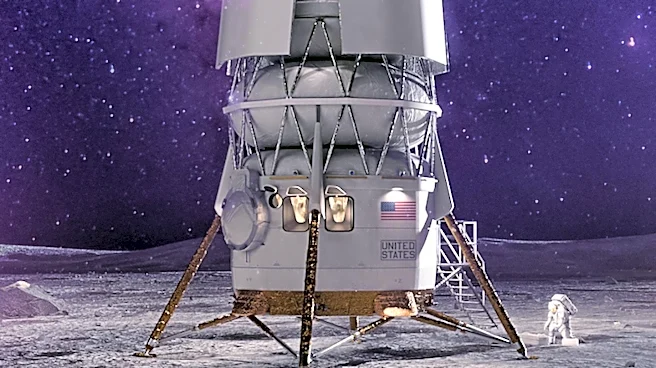
NASA plans to continue its lunar exploration efforts by integrating the scientific payloads from the terminated mission into future CLPS landings. The agency has already awarded new lunar lander missions to other companies, which may accommodate additional payloads. However, some of these missions are targeting the moon's near side, which may not support all the scientific objectives initially planned for the far side. Meanwhile, ispace-U.S. remains committed to the CLPS program and aims to participate in future contract opportunities under the new CLPS 2.0 framework. The company will focus on providing cost-effective lunar transportation services, adapting to the evolving demands of the American market.