








What's Happening?
Satellite data provider Spire Global has entered into a partnership with Diehl Defence, a major German defense contractor, to develop space-based missile warning and hypersonic threat detection capabilities. Announced on June 10, the memorandum of understanding
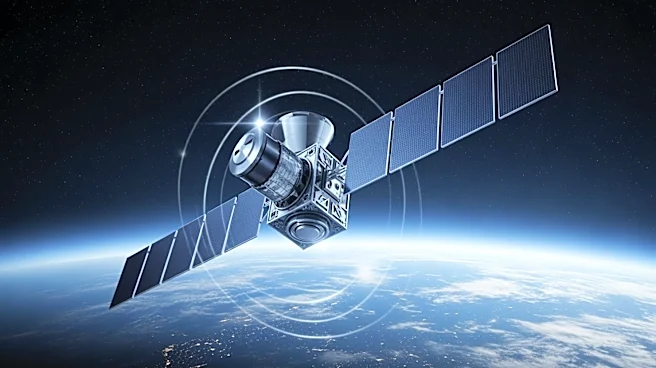
between the two companies aims to explore satellite-based intelligence and early warning systems to detect ballistic and hypersonic missile threats. This collaboration does not yet involve a contract or financial terms but positions the companies to pursue future opportunities in Europe's growing space-security and missile-defense market. Spire operates a constellation of small satellites in low Earth orbit, which collect and analyze various forms of geospatial intelligence, including radio-frequency signals and weather data. The partnership is part of a broader European effort to develop sovereign missile-warning capabilities, especially in light of Russia's invasion of Ukraine and increasing concerns over missile threats.
Why It's Important?
The collaboration between Spire and Diehl Defence is significant as it represents a shift towards greater strategic autonomy in European defense and intelligence. Historically, European nations have relied heavily on U.S. missile-warning capabilities, but there is now a push to develop independent space-based sensing architectures. This move is driven by the need to address the growing threat of hypersonic missiles, which are challenging to detect and intercept due to their ability to maneuver at high speeds. The partnership could enhance Europe's defense capabilities and reduce reliance on U.S. technology, potentially leading to a more balanced global defense landscape. Additionally, the development of such technologies could open new markets and opportunities for companies involved in satellite-based surveillance and early warning services.
What's Next?
As the partnership progresses, Spire and Diehl Defence will likely focus on integrating intelligence gathered from space-based systems with existing weapons platforms and military command-and-control networks. This integration is crucial for creating a comprehensive defense strategy against missile threats. The companies may also seek to secure contracts and funding to further develop and deploy these technologies. European governments, particularly Germany, are expected to play a key role in supporting and funding these initiatives as part of their broader defense strategies. The success of this partnership could encourage other European nations to invest in similar technologies, further enhancing the continent's defense capabilities.