








What's Happening?
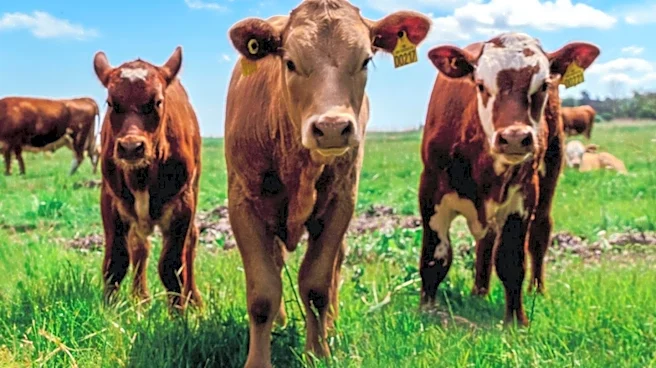
Many consumers mistakenly believe that organic milk is lactose-free due to its 'natural' label. However, organic certification in the U.S., governed by the USDA, focuses on farming practices such as animal welfare, pasture access, and the absence of synthetic
hormones and antibiotics. These standards do not alter the fundamental chemical composition of milk. All mammalian milk, including organic milk, naturally contains lactose, a sugar that requires the enzyme lactase for digestion. Therefore, individuals with lactose intolerance will experience symptoms from organic milk just as they would from conventional milk, unless the organic milk has been specifically processed to be lactose-free through the addition of lactase enzymes. The distinction between organic farming methods and the presence of lactose is crucial for consumers making informed dietary choices.
Why It's Important?
This clarification is important for public health and consumer education, particularly for the millions of individuals in the U.S. who suffer from lactose intolerance. Misconceptions can lead to unnecessary discomfort and health issues if individuals consume organic milk believing it to be lactose-free. For the dairy industry, it highlights the need for clear labeling and consumer education regarding product attributes. Brands that offer organic lactose-free milk combine the benefits of ethical farming practices with the digestive comfort needed by lactose-intolerant consumers. This segment of the market caters to a growing demand for products that align with both health and ethical considerations, influencing product development and marketing strategies within the food sector.
What's Next?
Consumers with lactose intolerance will need to continue to carefully check product labels for explicit 'lactose-free' certifications, even when purchasing organic dairy products. The food industry is likely to continue expanding its range of organic lactose-free options to meet consumer demand, emphasizing both the organic farming practices and the enzymatic processing that removes lactose. Educational campaigns from health organizations and dairy producers could help clarify the difference between organic certification and lactose content. This will empower consumers to make choices that support their dietary needs while also aligning with their preferences for sustainably produced goods. The market for specialized dairy products, including organic and lactose-free varieties, is expected to grow as consumer awareness increases.
Beyond the Headlines
The confusion surrounding organic milk and lactose content underscores a broader challenge in consumer understanding of food labeling and certifications. Many consumers associate 'organic' with a wide array of health benefits, sometimes extending beyond what the certification actually guarantees. This highlights the ethical responsibility of food producers and regulators to provide transparent and unambiguous information. The trend towards organic and lactose-free products also reflects a societal shift towards greater health consciousness and ethical consumption. As consumers become more discerning, the demand for products that cater to specific dietary needs while adhering to environmental and animal welfare standards will continue to shape agricultural practices and food manufacturing processes, pushing for innovation in both farming and food science.