
What's Happening?
China's passenger vehicle market experienced a significant shift in May, with the new energy vehicle (NEV) penetration rate reaching a record 62.9%, despite a 22.1% year-over-year decline in overall retail
sales. The decline was primarily driven by a 39% drop in internal combustion engine (ICE) vehicle sales, while NEV sales saw a modest 7.5% decrease. The China Passenger Car Association (CPCA) has adjusted its full-year outlook, predicting an 11% decline due to factors such as high oil prices and reduced consumer confidence. Despite the removal of subsidies, the NEV market continues to grow, indicating a potential structural shift in consumer preferences towards NEVs, which are perceived as offering superior technology and competitive pricing.
Why It's Important?
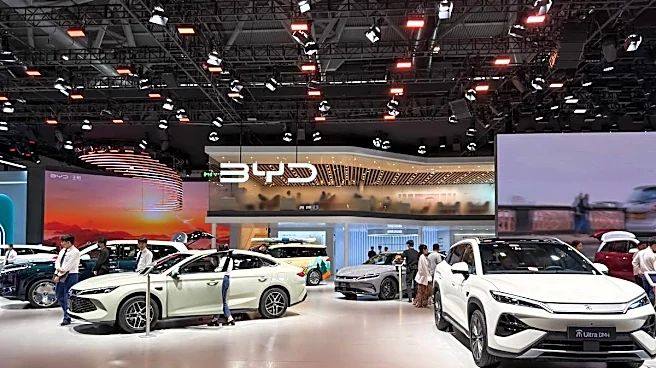
The rise in NEV penetration in China reflects a broader global trend towards sustainable transportation solutions. This shift is significant for the U.S. automotive industry, as it highlights the increasing competitiveness of NEVs in the global market. U.S. automakers may need to accelerate their transition to electric vehicles to remain competitive. Additionally, the decline in ICE vehicle sales suggests a long-term change in consumer behavior, which could impact global oil demand and influence energy policies. The export success of Chinese automakers like BYD and Geely underscores the growing influence of Chinese companies in the international automotive market, potentially challenging U.S. market share.
What's Next?
The CPCA anticipates an improvement in market conditions by the third quarter, with a return to growth expected in the fourth quarter. This recovery is contingent on stabilizing oil prices, improved consumer sentiment, and the resolution of production bottlenecks. The continued export growth of Chinese NEVs may pressure U.S. automakers to enhance their global strategies. Additionally, the U.S. government and industry stakeholders might need to consider policy adjustments to support domestic NEV production and adoption, ensuring competitiveness in the evolving global automotive landscape.