








What's Happening?
The Global Mangrove Alliance (GMA) Policy Working Group has released two policy briefs aimed at strengthening mangrove conservation and restoration efforts. These publications come as countries prepare for the 17th meeting of the Conference of the Parties
to the Convention on Biological Diversity (CBD COP17). The briefs, titled 'Policy Coherence for Mangroves: Aligning Commitments across the Rio Conventions & Ramsar Convention on Wetlands' and 'Mangroves and CBD COP17: Entry Points and Recommendations,' outline strategies for governments and partners to leverage existing policy frameworks, improve monitoring and accountability, and mobilize investment for mangrove ecosystems. Mangroves are recognized for their critical role in biodiversity support, blue carbon storage, coastal protection against climate impacts, and ecosystem resilience. The first brief identifies opportunities to advance mangrove conservation during the first global review of collective progress towards the Kunming-Montreal Global Biodiversity Framework (KMGBF) at COP17, noting that actions for coastal ecosystems are lagging. The second brief focuses on aligning commitments under the three Rio Conventions (UNFCCC, CBD, UNCCD) and the Ramsar Convention on Wetlands.
Why It's Important?
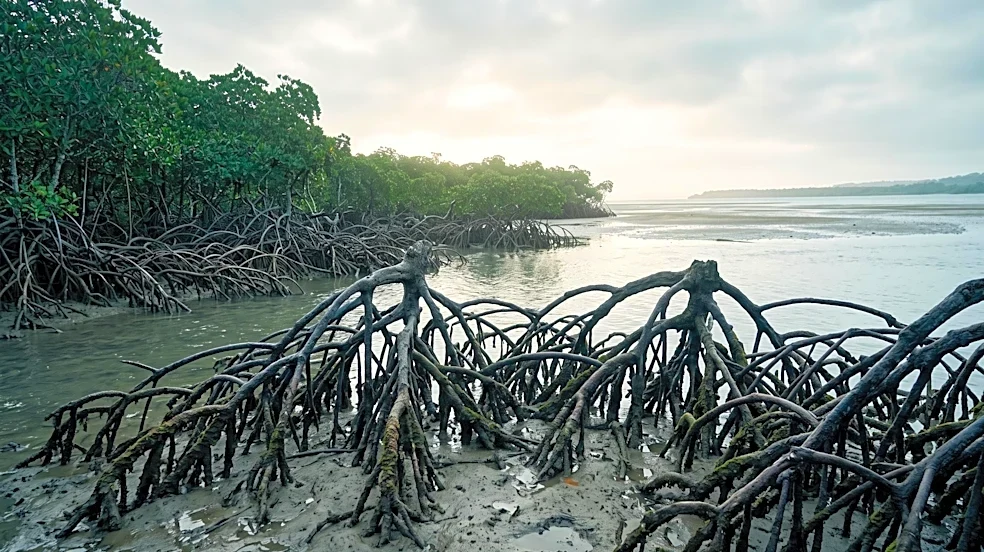
These policy briefs are crucial for elevating the importance of mangrove ecosystems on the international conservation agenda. Mangroves provide multifaceted benefits, acting as natural barriers against climate change impacts, supporting diverse marine life, and sequestering significant amounts of carbon. The lack of coordinated policy and investment has hindered effective conservation, making these briefs a timely intervention. By advocating for stronger national implementation, cross-convention cooperation, improved monitoring, and enhanced finance, the GMA aims to translate global commitments into tangible actions. The alignment of policies across various international conventions is particularly significant, as it can streamline efforts and maximize the impact of conservation initiatives, preventing fragmented approaches. This coordinated strategy is essential for achieving global biodiversity and climate goals, ensuring the long-term health of coastal communities and ecosystems worldwide.
What's Next?
As CBD COP17 approaches, the recommendations from the GMA's policy briefs will be presented to policymakers and partners. The goal is to influence COP decisions and encourage their translation into domestic implementation strategies. Key priorities include embedding mangrove commitments in national frameworks, fostering multi-stakeholder coordination, and utilizing updated technical resources for monitoring. The briefs also emphasize connecting commitments with finance by aligning investment priorities with National Biodiversity Strategies and Action Plans (NBSAPs) and integrating them into national biodiversity finance plans. The year 2026 is highlighted as a significant opportunity for progress, with all three Rio Conventions holding their conferences and the Ramsar Convention implementing its Fifth Strategic Plan. The GMA Policy Working Group will continue to support countries with practical guidance and capacity building to implement these commitments on the ground, aiming for more coherent, evidence-based, and adequately financed action for mangroves.
Beyond the Headlines
The GMA's initiative highlights the intricate relationship between biodiversity, climate change, and sustainable development, underscoring that effective environmental conservation requires integrated policy approaches rather than isolated efforts. The focus on 'policy coherence' reveals a deeper challenge in international environmental governance: the fragmentation of mandates and the difficulty in aligning diverse global agreements. By advocating for a unified approach to mangrove conservation, the GMA is pushing for a paradigm shift towards more holistic environmental management. This effort also implicitly addresses the economic value of natural ecosystems, framing mangroves not just as ecological assets but as critical infrastructure for climate resilience and economic stability. The success of these recommendations could set a precedent for how other interconnected environmental challenges are addressed, fostering greater collaboration and efficiency in global conservation efforts and demonstrating the power of nature-based solutions.