






What's Happening?
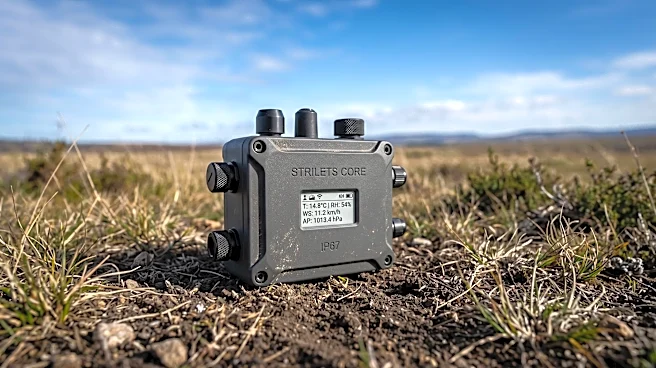
Ukrainian engineers have developed 'Strilets Core,' a portable weather station equipped with an offline ballistic computer. This technology is designed to assist long-range snipers and automated weapon systems in accurately hitting targets, particularly
incoming FPV drones. The Strilets Core integrates external meteorological measurements directly into its software, providing real-time environmental data to generate immediate firing corrections via an open API. This system is crucial for automated turrets and unmanned ground vehicles that need to calculate complex firing trajectories based on localized atmospheric conditions to intercept fast-moving aerial targets. The device, weighing 234 grams and built to IP67 standards, operates without an internet connection, using onboard sensors for temperature, humidity, atmospheric pressure, wind speed, wind direction, and tilt angle, along with GPS positioning. Over 12 automated .50-caliber Sky Sentinel turrets, which are AI-guided systems combining heavy machine guns with automated fire-control modules, have already been deployed across Kyiv to counter Russian jet-powered attack drones, successfully engaging and shooting down targets like the Geran-5.
Why It's Important?
The development of the Strilets Core and the deployment of Sky Sentinel turrets signify a significant advancement in Ukraine's defensive capabilities against drone warfare. The ability to accurately track and neutralize FPV drones, which are increasingly used in modern conflicts due to their affordability and versatility, is critical for protecting infrastructure and personnel. This technology reduces the reliance on human operators for complex ballistic calculations, enhancing the speed and precision of responses to aerial threats. The integration of AI and real-time environmental data into defense systems represents a shift towards more autonomous and efficient military operations. For the U.S. and its allies, this showcases the potential for similar technological adaptations in their own defense strategies, particularly in countering asymmetric threats posed by readily available drone technology. The success of these Ukrainian innovations could influence future military procurement and research in drone defense globally.
What's Next?
The engineering team behind Strilets Core is actively seeking investment to transition the current prototype into a production-ready model for field testing in the ongoing conflict. Successful field deployment and mass production would further bolster Ukraine's air defense network, potentially leading to a wider adoption of such AI-guided systems. The continuous refinement of these technologies will likely focus on improving sensor accuracy, battery performance, and integration with a broader range of automated weapon platforms. Furthermore, the experience gained from using these systems in real combat scenarios will provide valuable data for future iterations and advancements in autonomous defense. This could also spur international collaboration and development in counter-drone technologies, as nations seek to adapt to the evolving nature of modern warfare.
Beyond the Headlines
The emergence of AI-guided defense systems like Strilets Core and Sky Sentinel turrets highlights a broader trend towards increased autonomy in military technology. While these systems offer significant advantages in terms of precision and efficiency, they also raise ethical and legal questions regarding the role of human oversight in lethal decision-making. The 'tunnel vision' effect of FPV drones, as noted by the ICRC, and the potential for limited target identification capabilities in low-cost sensors, underscore the importance of robust legal reviews and ethical guidelines for autonomous weapons. The rapid adaptation of commercial technology for military use, as seen with FPV drones, also challenges traditional arms control frameworks and necessitates new approaches to ensure compliance with international humanitarian law. The ongoing conflict in Ukraine serves as a real-world laboratory for these emerging technologies, providing critical insights into their effectiveness and the associated challenges.