




What's Happening?
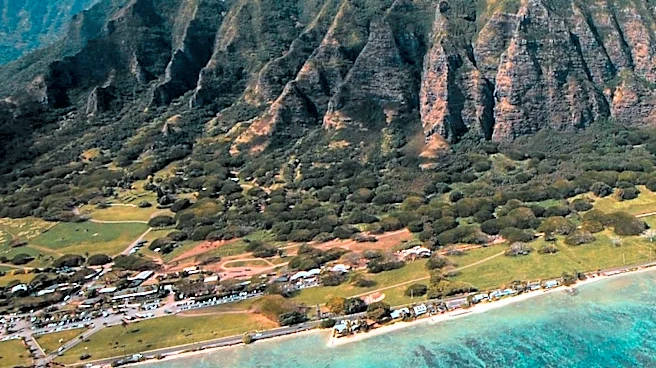
Hawaii has been identified as the top state in the U.S. for outdoor adventure opportunities, based on Kühl's Adventure Access Index. The index, which evaluates factors such as trail density, public land per capita, hiking season quality, and recreation
economy vitality, awarded Hawaii a score of 51.4. A significant contributor to Hawaii's leading position is its year-round hiking season and a robust recreation economy, which accounts for 6.1 percent of the state's economy. The state also boasts two national parks, Hawaii Volcanoes National Park and Haleakala National Park. The findings highlight that trails in Hawaii are rarely closed due to weather, offering consistent outdoor access for both residents and visitors. This contrasts with other states often perceived as outdoor capitals, such as Colorado, which ranked seventh, and other Western states that placed lower due to shorter seasons and extensive distances between trails.
Why It's Important?
This ranking is important for the U.S. tourism and outdoor recreation industries, as it redefines perceptions of adventure-friendly states. For Hawaii, this recognition could further boost its tourism sector, attracting more visitors specifically interested in outdoor activities, thereby strengthening its recreation economy. It also provides valuable data for policymakers and urban planners in other states to understand the key components that contribute to outdoor accessibility and economic vitality in this sector. The index's methodology, which prioritizes factors like year-round accessibility and economic contribution, suggests a shift in how outdoor recreation potential is measured, moving beyond just scenic beauty to practical usability and economic impact. This could influence investment in trail development, public land management, and support for local recreation businesses across the nation.
What's Next?
Following Kühl's Adventure Access Index, Hawaii may leverage this top ranking in its tourism marketing campaigns to attract a broader demographic of outdoor enthusiasts. Other states, particularly those that ranked lower despite having significant natural attractions, might re-evaluate their strategies for promoting and enhancing outdoor access. This could lead to increased investment in trail infrastructure, efforts to extend recreational seasons where possible, and initiatives to bolster local recreation economies. The index's emphasis on factors like public land per capita and recreation economy vitality could also prompt discussions among state governments about land use policies and economic development strategies related to outdoor activities. Future iterations of such indices could further refine these metrics, providing ongoing insights into the evolving landscape of U.S. outdoor adventure.
Beyond the Headlines
The Kühl Adventure Access Index subtly challenges conventional notions of what constitutes an 'adventure-friendly' state, moving beyond mere geographical features to include practical accessibility and economic integration. This shift in perspective highlights the growing importance of the recreation economy as a significant contributor to state GDP and employment. It also underscores the value of consistent, year-round access to nature, which can have profound implications for public health and well-being. The index implicitly suggests that states with diverse climates and well-maintained infrastructure for outdoor activities, regardless of their size or traditional 'rugged' image, can offer superior adventure experiences. This could lead to a re-evaluation of how states prioritize and fund their natural resources and recreational facilities, potentially fostering a more equitable distribution of outdoor opportunities across the U.S.