
What's Happening?
NATO has reported a sharp increase in the number of interceptions of Russian military aircraft near its airspace. According to the Alliance’s Joint Force Command for Central and Eastern Europe, the number of interception sorties has risen by more than
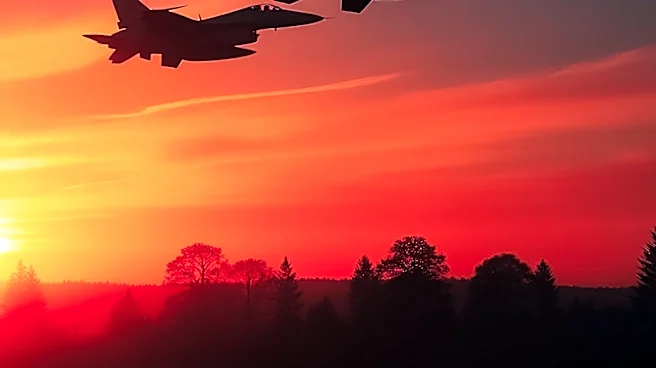
250% compared to July of the previous year. This increase is attributed to a significant rise in Russian military aviation activity near NATO's borders. Russian aircraft have been flying close to NATO airspace without submitting flight plans or activating transponders, prompting NATO fighter jets to scramble and intercept these aircraft. A recent incident involved a Russian Il-20 reconnaissance aircraft, which was intercepted by Polish fighter jets near the city of Koszalin. Despite the increased activity, NATO officials confirmed that there have been no violations of NATO airspace.
Why It's Important?
The increase in interceptions of Russian aircraft by NATO highlights the growing tensions between Russia and NATO member states. This development is significant as it underscores the ongoing geopolitical friction in Eastern Europe, particularly in the context of Russia's military activities. The increased frequency of these interceptions suggests a more assertive Russian posture, which could potentially destabilize the region. For NATO, maintaining the integrity of its airspace is crucial for the security of its member states. The situation also emphasizes the importance of NATO's air policing missions and the need for continued vigilance and readiness to respond to potential threats. The actions taken by NATO serve as a deterrent against potential aggression and reassure member states of the alliance's commitment to collective defense.
What's Next?
NATO is likely to continue its air policing missions and maintain a heightened state of readiness along its eastern borders. The alliance may also engage in diplomatic efforts to address the situation and prevent further escalation. Member states could increase their contributions to NATO's air policing efforts, providing additional resources and personnel to support these missions. The situation may also prompt discussions within NATO about enhancing its air defense capabilities and strategies to counter potential threats from Russian military activities. Additionally, NATO may seek to engage with Russia through diplomatic channels to address the underlying issues and reduce tensions.