






What's Happening?
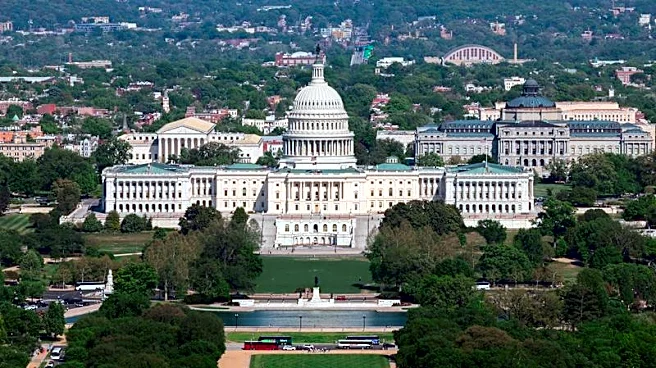
The U.S. House of Representatives has passed a bipartisan bill to fund most of the Department of Homeland Security (DHS), effectively ending the longest government shutdown in U.S. history. The bill, which now awaits President Trump's signature, excludes
funding for Immigration and Customs Enforcement (ICE) and Border Patrol, which Republicans plan to address through a separate reconciliation bill. The shutdown had left many DHS employees without pay, prompting urgent calls for resolution. The bill's passage marks a significant step in restoring operations for agencies like the Transportation Security Administration and the Secret Service.
Why It's Important?
The resolution of the DHS funding impasse is crucial for national security and the functioning of key federal agencies. The shutdown had significant implications, including potential disruptions in airport security and emergency management services. By securing funding, the government can ensure the continuity of essential services and the well-being of federal employees. The decision to fund ICE and Border Patrol separately reflects ongoing political debates over immigration enforcement, highlighting the complexities of federal budget negotiations and the impact of partisan divisions on government operations.
What's Next?
With the DHS funding bill passed, attention now turns to the reconciliation process for ICE and Border Patrol funding. This approach allows Republicans to bypass Democratic opposition, potentially setting a precedent for future budget negotiations. The outcome will influence immigration policy and enforcement strategies, with potential implications for border security and federal immigration operations. As Congress navigates these issues, stakeholders will closely monitor the impact on immigration reform efforts and the broader political landscape.