






What's Happening?
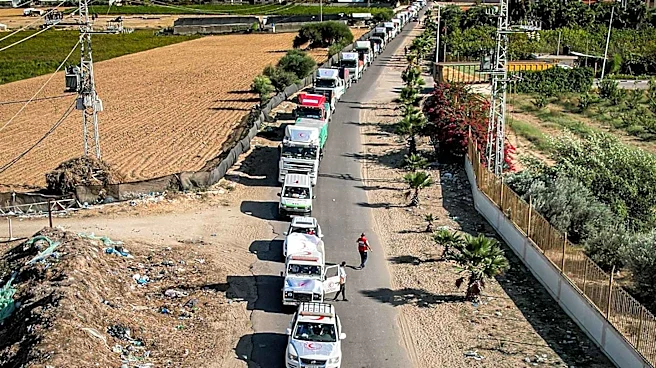
India, alongside 50 other United Nations member states, has issued a joint statement calling for safe, sustained, and unhindered humanitarian assistance to civilians in Gaza, particularly as winter approaches. The Permanent Mission of India to the UN
emphasized the importance of protecting civilians, respecting international humanitarian law, and renewing efforts for lasting peace and stability in the region. The joint statement, delivered by the UK's Permanent Representative to the UN, Ambassador Sarah MacIntosh, urged the incoming Israeli government to facilitate rapid and unimpeded humanitarian access throughout Gaza. This includes approving critical items such as shelter materials, fuel, water, sanitation, and health supplies to prevent a further deterioration of public health. The nations also called for the restoration of medical referral routes to hospitals in East Jerusalem and the West Bank for patients whose conditions cannot be adequately treated in Gaza, and stressed the need to protect healthcare workers and facilities.
Why It's Important?
This joint international appeal highlights the severe and worsening humanitarian crisis in Gaza, particularly with the onset of winter. The call for unhindered aid access and the provision of essential supplies is crucial to mitigating public health risks and preventing further suffering among the civilian population. The emphasis on protecting healthcare infrastructure and workers underscores the critical need to uphold international humanitarian law in conflict zones. For the U.S., this development reflects a broader international consensus on the urgency of the situation, potentially influencing its diplomatic efforts and aid policies in the region. The involvement of numerous nations, including key allies, signals a unified global concern that could pressure all parties involved to prioritize humanitarian considerations and work towards a more stable resolution.
What's Next?
The joint statement specifically calls on the incoming Israeli government to facilitate humanitarian corridors and approve critical aid items. This suggests that international pressure will continue to mount on Israel to ease restrictions on aid entry. The participating countries have committed to supporting humanitarian efforts, including urgent preparations for winter, which will involve providing shelter, water, sanitation, and health supplies. Further diplomatic efforts are expected to focus on ensuring the implementation of these calls to action. The situation will likely remain a significant point of discussion within the UN and among international bodies, with ongoing monitoring of aid delivery and civilian protection in Gaza.
Beyond the Headlines
The collective action by 50 UN nations, including India, underscores a growing global concern over the humanitarian situation in Gaza and the perceived inadequacy of current aid mechanisms. This broad international front could set a precedent for how the international community addresses humanitarian crises in conflict zones, potentially leading to more coordinated and assertive diplomatic interventions. The call for transparent criminal investigations into attacks on healthcare and humanitarian workers also points to a deeper demand for accountability and adherence to international law. This could influence future legal frameworks and enforcement mechanisms related to protecting civilians and aid workers in similar conflicts, potentially shifting the balance of power in humanitarian negotiations.