



What's Happening?
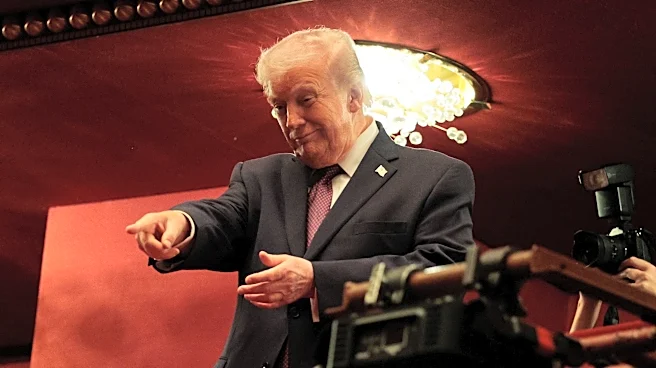
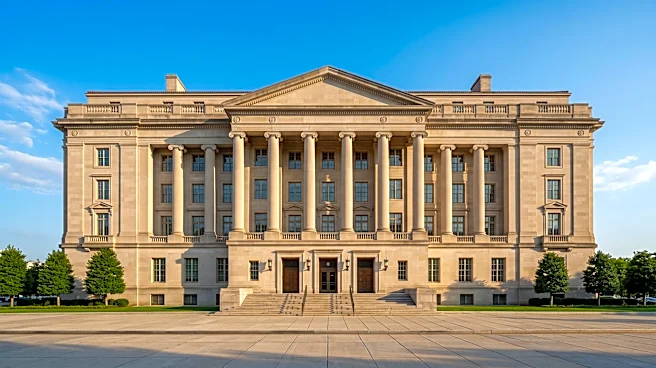
President Trump reportedly intervened in the Department of Justice's (DOJ) antitrust lawsuit against Live Nation, leading to a settlement just one week into the federal trial. According to The Wall Street Journal, President Trump met with Live Nation CEO
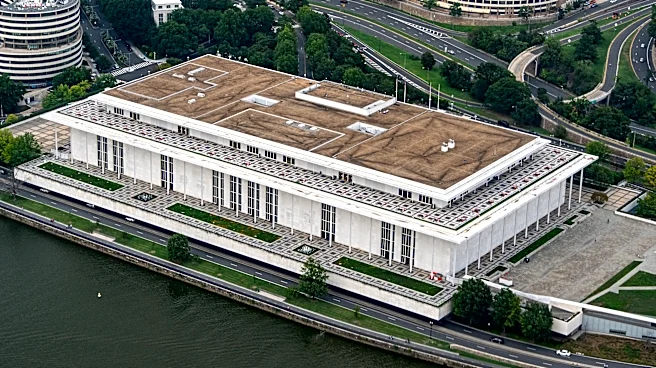
Michael Rapino at the Oval Office in late February. During this meeting, which primarily focused on Live Nation potentially managing operations for the Kennedy Center, President Trump also inquired why the antitrust case had not been settled. Following this discussion, he directed the DOJ to reach a deal with Live Nation, which occurred in early March. While the DOJ settled, many co-plaintiffs continued with the case, and a jury subsequently found Live Nation liable for operating as a monopoly in April.
Why It's Important?
This intervention raises significant questions about the independence of the Department of Justice and the potential for executive influence in antitrust enforcement. The DOJ's settlement, which was criticized for not going far enough to address Live Nation's market dominance, contrasts with the jury's later finding of a monopoly. This disparity highlights concerns about whether the settlement adequately protected consumers and promoted fair competition in the live entertainment industry. For U.S. businesses, such interventions could create uncertainty regarding regulatory enforcement and potentially encourage lobbying efforts to influence government actions. The incident also underscores the broader debate about the concentration of power in major corporations and the effectiveness of antitrust laws in preventing monopolies.
What's Next?
Despite the DOJ's settlement, the jury's finding that Live Nation operates as a monopoly means that remaining plaintiff states are still pursuing the company's divestment from Ticketmaster. This indicates that the legal challenges against Live Nation are far from over, and the company may face further actions to break up its integrated operations. The reports of President Trump's intervention could also prompt increased scrutiny from lawmakers and the public regarding the transparency and integrity of antitrust proceedings. Future administrations may face pressure to clarify the boundaries between executive influence and the independent enforcement functions of the DOJ, particularly in high-profile cases involving major corporations. The outcome of the ongoing state-level actions will be crucial in determining the future structure of the live entertainment market.
Beyond the Headlines
The reported intervention by President Trump in the Live Nation antitrust case touches upon deeper issues concerning corporate power, political influence, and the rule of law. It highlights the ethical dilemmas that arise when powerful corporations engage in extensive lobbying and cultivate relationships with high-ranking government officials. The criticism that the DOJ settlement did not sufficiently address Live Nation's monopoly suggests a potential erosion of public trust in regulatory bodies. This situation could fuel calls for more robust antitrust enforcement and greater transparency in government-corporate interactions. Furthermore, it underscores the ongoing tension between economic efficiency, often cited by large corporations, and the principles of fair competition and consumer welfare that antitrust laws are designed to uphold. The long-term implications could include a re-evaluation of antitrust policies and a push for reforms to safeguard the independence of regulatory agencies.