
What's Happening?
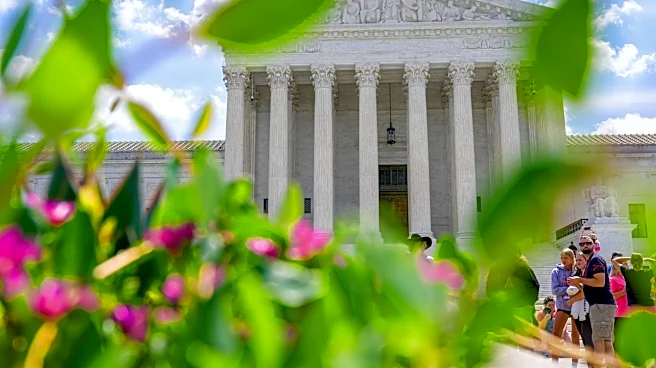
The Trump administration has approached the Supreme Court to reinstate an executive order that could significantly alter mail voting ahead of the November midterm elections. The Department of Justice has requested
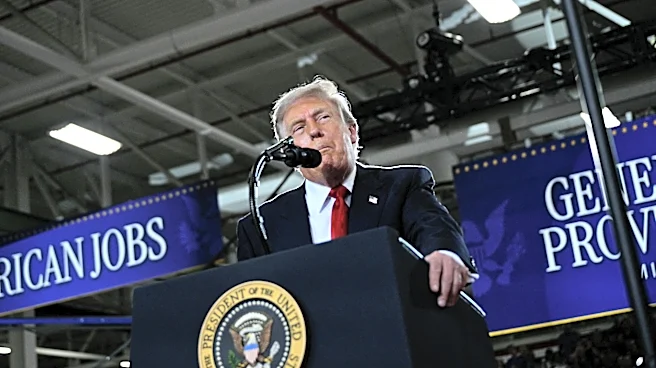
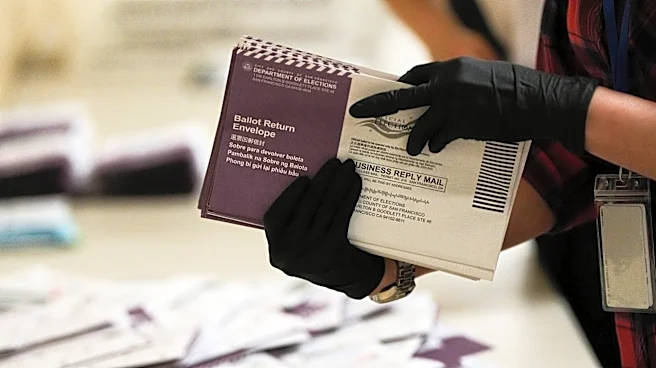
the suspension of lower court rulings that currently block the implementation of these changes in nearly half the country. This move follows President Trump's ongoing campaign to question the legitimacy of mail-in voting, which he claims, without evidence, facilitates fraud. The executive order mandates the creation of a state list of eligible voters, with mail ballots sent only to those on the list. Democratic officials from 23 states and the District of Columbia have filed a lawsuit, arguing that the Constitution grants states and Congress, not the president, the authority to set election rules. A federal judge in Massachusetts has temporarily blocked the order for the suing states, a decision upheld by the First Circuit Court of Appeals.
Why It's Important?
This legal battle over mail voting is crucial as it could impact voter turnout and election integrity in the upcoming midterms. Mail voting has become increasingly popular, with about 30% of votes in the 2024 presidential election cast this way. The Trump administration's push to restrict mail voting is part of a broader effort to impose stricter voting regulations, which critics argue could disenfranchise voters, particularly in states with large Democratic populations. The outcome of this case could set a precedent for federal versus state control over election processes, potentially reshaping the electoral landscape in the U.S.
What's Next?
The Supreme Court's decision on whether to allow the executive order to proceed will be pivotal. If the court sides with the Trump administration, states may have to quickly adapt to new voting procedures, potentially causing confusion and logistical challenges. The response from states and civil rights groups will likely be swift, with further legal challenges anticipated. The deadline for responses to the administration's appeal is August 3, indicating a rapid timeline for developments in this case.