



What's Happening?
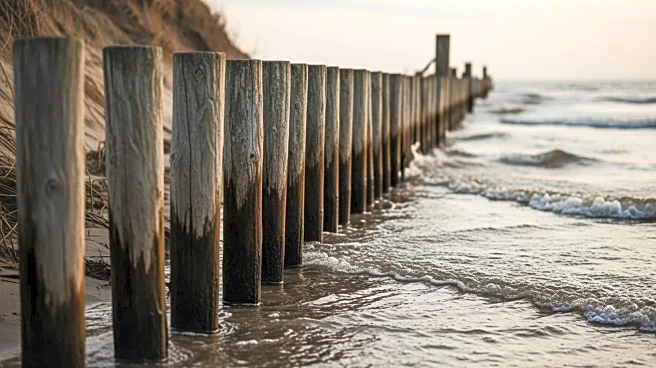
Residents in Thorpeness, Suffolk, are being forced to leave their homes due to severe coastal erosion. Hilary Lightfoot, a long-time resident, faces the loss of her flat as a quarter of her garden has already fallen away. The erosion has been exacerbated
in recent years, with several homes demolished this winter alone. The situation is mirrored in Hemsby, Norfolk, where significant erosion has also occurred. The erosion is attributed to the region's soft geology, which is easily worn away by the sea. Despite the ongoing nature of this issue, there is no evidence that climate change is directly worsening the erosion in East Anglia, although it adds complexity to the situation.
Why It's Important?
The coastal erosion in Thorpeness and surrounding areas highlights the urgent need for effective coastal management strategies. The loss of homes not only affects the residents' lives but also raises questions about the long-term sustainability of coastal communities. The economic and cultural significance of these areas must be considered in future government funding and policy decisions. The situation underscores the broader challenges of adapting to environmental changes and protecting vulnerable communities from natural hazards.
What's Next?
Local councils and the Environment Agency are under pressure to address the erosion and protect affected communities. Discussions about future government funding must consider the cultural and economic value of at-risk areas. Residents like Hilary Lightfoot are left in a state of uncertainty, with limited options for relocation or compensation. The situation calls for a multi-government approach to develop comprehensive solutions that balance environmental preservation with community needs.