
What's Happening?
Environmental advocates are encouraging homeowners to convert traditional lawns into wildlife-friendly gardens as a means to combat environmental issues. Lawns, which cover approximately 40 million acres
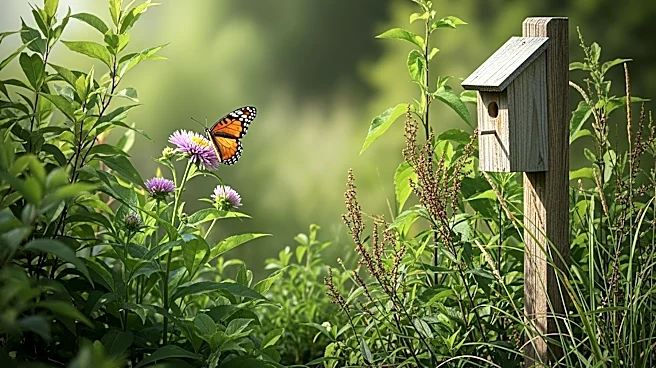
in the U.S., contribute significantly to pollution through the use of gas-powered equipment and chemical fertilizers. These chemicals often end up in water bodies, causing further ecological harm. By reducing lawn sizes and planting native species, homeowners can create habitats that support local wildlife, including birds and butterflies. Experts like Doug Tallamy from the University of Delaware suggest that such changes could provide more habitat than several national parks combined. The initiative is part of a broader movement to address climate change at local levels, as federal efforts have stalled.
Why It's Important?
The push to convert lawns into gardens is significant due to its potential environmental benefits. Reducing lawn sizes can decrease air pollution and chemical runoff, which are major environmental concerns. Additionally, creating habitats for wildlife can help reverse the decline in bird and butterfly populations in North America. This grassroots approach empowers individuals and communities to take action against climate change, filling the gap left by insufficient federal policies. The movement also highlights the importance of biodiversity and sustainable landscaping practices, which can lead to healthier ecosystems and improved quality of life.
What's Next?
As more individuals and communities embrace this initiative, there may be increased demand for native plants and educational resources on sustainable gardening. Local governments and organizations might offer incentives or support to encourage participation. Homeowners associations and city codes may need to adapt to accommodate these changes, potentially revising regulations that restrict certain types of landscaping. The success of this movement could inspire similar environmental initiatives, fostering a culture of sustainability and conservation at the community level.
Beyond the Headlines
This movement also raises questions about cultural attitudes towards traditional lawns and the aesthetic values associated with them. As more people adopt wildlife-friendly gardens, there may be a shift in public perception, valuing ecological benefits over conventional beauty standards. This could lead to broader acceptance of diverse landscaping styles and a reevaluation of what constitutes an attractive and responsible yard. Additionally, the initiative could influence urban planning and development, encouraging the integration of green spaces and wildlife habitats in city designs.