



What's Happening?
The city of Cedar Rapids has announced plans to develop a new public space, the Cedar Rapids Bank & Trust Sculpture Park, on Mays Island. This initiative, revealed on October 15th, is a partnership with Cedar Rapids Bank & Trust, whose lead gift will
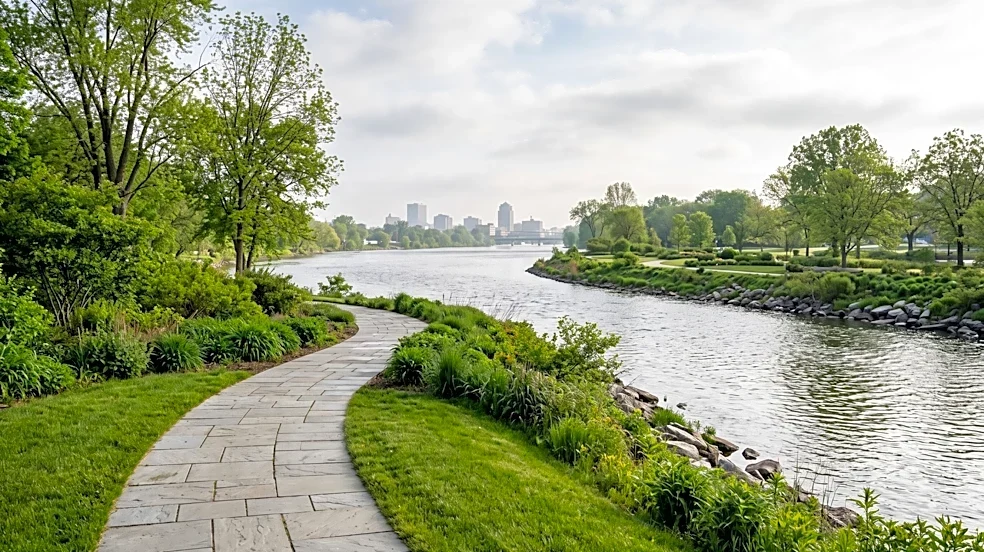
facilitate the creation of this signature artwork park. The park is envisioned as a free public space designed to integrate art, nature, and community engagement along the riverfront. The announcement coincides with Cedar Rapids Bank & Trust's 25th anniversary. The project timeline indicates that the selection of the park's anchor artwork will commence now and conclude in 2027. Development and site preparation will also begin during this period. Further improvement projects on Mays Island, including renovating the entry plaza, redesigning the canopy, and establishing an accessible sidewalk network with coordinated signage, lighting, and amenities, are slated to start in 2027. The city aims to unveil the anchor artwork in 2028, marking 20 years since the 2008 flood and symbolizing progress and recovery.
Why It's Important?
The establishment of the Cedar Rapids Bank & Trust Sculpture Park is a significant development for the city's cultural landscape and urban revitalization efforts. It underscores a commitment to enhancing public spaces and making art accessible to all residents, which can significantly improve the quality of life and foster community pride. This project also represents a notable collaboration between the public sector and a local financial institution, highlighting the role of corporate philanthropy in civic development. By combining art and nature, the park aims to create a unique attraction that could draw both locals and tourists, potentially boosting local businesses and the economy. Furthermore, the park's planned unveiling in 2028, coinciding with the 20th anniversary of the 2008 flood, positions it as a symbol of resilience and recovery, reflecting the city's ongoing efforts to rebuild and thrive after significant challenges. This initiative contributes to the broader trend of cities investing in cultural amenities to create vibrant, livable urban environments.
What's Next?
The immediate next steps for the Cedar Rapids Bank & Trust Sculpture Park project involve the selection process for the anchor artwork, which is expected to be finalized by 2027. Concurrently, development and site preparation activities will commence on Mays Island. In 2027, comprehensive improvement projects will begin, focusing on infrastructure enhancements such as the entry plaza renovation, canopy redesign, and the installation of an accessible sidewalk network, along with new signage, lighting, and amenities. The city plans to unveil the park's anchor artwork in 2028, marking a significant milestone in the project's completion and the city's post-flood recovery. Community engagement will likely continue throughout these phases, with opportunities for public input on design elements or programming. The success of this project could also inspire further public-private partnerships for urban development and cultural initiatives in Cedar Rapids.
Beyond the Headlines
The creation of the Cedar Rapids Bank & Trust Sculpture Park on Mays Island carries deeper implications for urban identity and civic memory. Mays Island, having been significantly impacted by the 2008 flood, holds a symbolic place in the city's history. Transforming it into a vibrant public art space not only aids in physical recovery but also contributes to psychological and cultural healing, offering a tangible representation of renewal and progress. The integration of art into a natural setting can foster a deeper connection between residents and their environment, promoting well-being and a sense of place. Ethically, the project highlights the importance of accessible public spaces and the democratizing power of art, ensuring that cultural enrichment is available to all, regardless of socioeconomic status. Long-term, such initiatives can redefine a city's image, attracting talent and investment, and fostering a dynamic cultural ecosystem that contributes to its overall resilience and attractiveness.