






What's Happening?
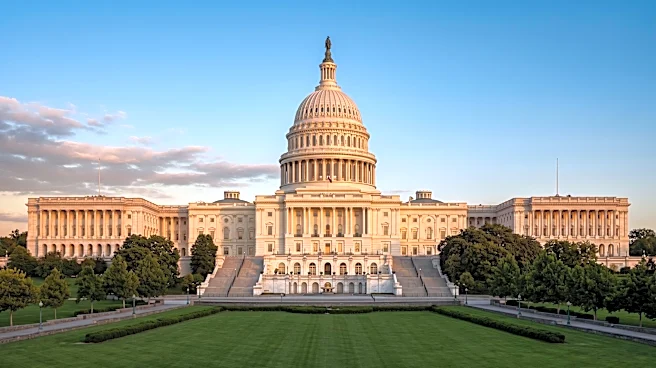
The U.S. House of Representatives has approved the bipartisan 2026 Water Resources Development Act, a bill that could provide significant federal funding for water and sewer projects in communities like Haverhill and Methuen, Massachusetts. Congresswoman
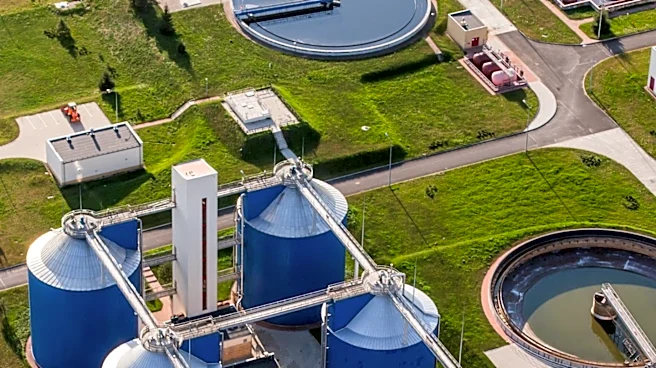
Lori Trahan supported the bill, which includes an amendment, also backed by 6th District Congressman Seth Moulton, to increase potential federal aid for Haverhill from $40 million to $50 million. The legislation authorizes $180 million in federal funding for communities in the 3rd District, with $90 million split among Fitchburg, Lawrence, and Methuen, and another $90 million for Lowell and Haverhill. For Haverhill, this represents an increase in potential maximum aid from $30 million to $50 million compared to 2024 levels, while Lowell's authorization would increase from $30 million to $40 million. This aid could address critical infrastructure needs, such as the estimated $26 million cost of replacing a failed force main sewer in Haverhill that previously caused millions of gallons of untreated sewage to flow into the Merrimack River.
Why It's Important?
This legislative approval is crucial for addressing long-standing water infrastructure challenges in U.S. communities, particularly in gateway cities that often face significant financial burdens for such upgrades. The bill's passage in the House signals a federal commitment to supporting local efforts to improve water quality and public health. For cities like Haverhill, the potential for $50 million in federal aid could alleviate the financial strain of costly repairs and prevent environmental disasters, such as sewage spills into vital waterways like the Merrimack River. This investment in infrastructure is vital for economic development, public health, and environmental protection. It also highlights the role of federal legislation in providing necessary resources that local municipalities might struggle to secure independently, thereby ensuring safer and more reliable water and sewer systems for residents.
What's Next?
The 2026 Water Resources Development Act now proceeds to the Senate for further consideration. If it becomes law, community authorizations will then be eligible for funding through the congressional appropriations process. This means that while the bill authorizes the potential for funding, actual dollars will still need to be allocated in future appropriations bills. Congresswoman Trahan emphasized the importance of continued collaboration with local, state, and federal leaders to secure these funds. The focus will shift to ensuring that the authorized support translates into tangible financial assistance for the communities. Additionally, the ongoing efforts to address water infrastructure crises, such as the Water Emergency and Technical Assistance Act introduced by Trahan, Senator Edward J. Markey, and Senator Elizabeth Warren, indicate a sustained legislative push for comprehensive solutions in this area.
Beyond the Headlines
The recurring need for federal intervention in local water infrastructure projects points to a broader national issue of aging infrastructure and underinvestment at the state and local levels. Many U.S. cities face similar challenges, where decades of deferred maintenance have led to critical failures and environmental hazards. This bill, while addressing specific regional needs, underscores the systemic nature of these problems and the necessity of a coordinated national strategy for infrastructure renewal. The environmental impact of failing infrastructure, such as sewage contamination of rivers, highlights the interconnectedness of public works with ecological health and recreational opportunities. Furthermore, the bipartisan support for such measures suggests a recognition across the political spectrum of the fundamental importance of clean water and reliable sanitation systems for all Americans, transcending typical partisan divides.