








What's Happening?
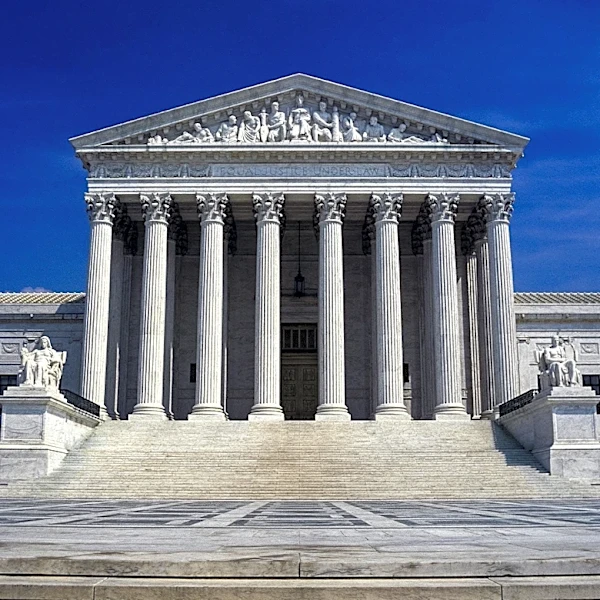
The Supreme Court's 2025-2026 term is notable for its significant rulings on presidential power and federal policy, with Justice Brett Kavanaugh playing a key role in majority opinions. The term saw decisions on issues such as tariffs, immigration enforcement,
and gun regulation, often resulting in 6-3 ideological splits. Chief Justice John Roberts and Justice Kavanaugh were frequently in the majority, with Kavanaugh ranking highly in majority-opinion writing burden. The term's complexity is underscored by the Court Effort Index, which measures the visible institutional effort in terms of days from argument to decision, opinion length, and division among justices.
Why It's Important?
The Supreme Court's decisions during this term have far-reaching implications for U.S. governance and policy. The rulings on presidential authority and federal policy could reshape the balance of power between the executive branch and other government entities. Justice Kavanaugh's prominent role in these decisions highlights his influence on the Court's direction. The term's focus on high-effort cases reflects the Court's engagement with complex and contentious issues, which could impact future legal interpretations and public policy. Stakeholders in government, law, and civil society will need to navigate these changes as they adapt to the evolving legal landscape.
What's Next?
As the Supreme Court continues to address high-profile cases, the focus will likely remain on how the justices interpret and apply constitutional principles to contemporary issues. Future terms may see continued scrutiny of presidential powers and federal policies, with potential challenges to recent rulings. The Court's decisions will be closely watched by legal experts, policymakers, and the public, as they could influence legislative and executive actions. The dynamics within the Court, particularly the roles of justices like Kavanaugh, will be critical in shaping its future jurisprudence.