







What's Happening?
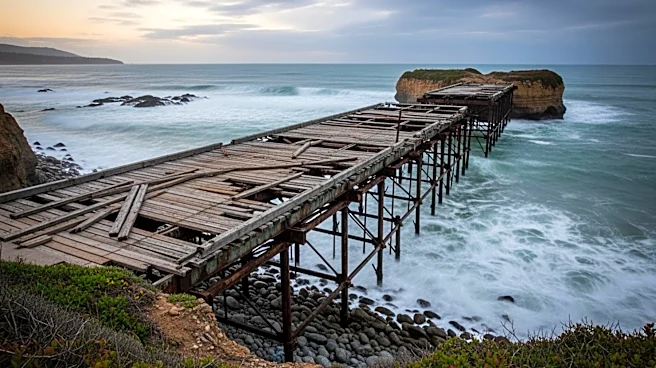
The Pacifica Municipal Pier, a landmark structure in the small beach city south of San Francisco, has been closed due to significant structural damage. City workers discovered cracks running through the pier, with concrete chunks falling into the ocean,
prompting the closure. This is not the first time the 53-year-old pier has shown signs of stress; it was partially closed in 2021 and 2023 due to similar issues. The pier's deterioration is attributed to continuous exposure to high winds, large waves, and a harsh marine environment, exacerbated by rising sea levels. A 2025 engineering report had already identified several sections of the pier in poor condition, recommending closure before anticipated storms. The closure of the pier also affects the Chit Chat Cafe, a small restaurant on the pier, which has been shut down as well.
Why It's Important?
The closure of the Pacifica Pier underscores the broader challenges faced by coastal infrastructure in California due to climate change and rising sea levels. As sea levels continue to rise, coastal structures, many of which were built in the early 1900s, are increasingly vulnerable to damage from storms and marine conditions. This situation highlights the urgent need for significant investment in infrastructure upgrades and maintenance to ensure safety and resilience. The economic impact is also significant, as piers are vital to local tourism and community activities. The closure could lead to financial losses for local businesses and affect the community's cultural heritage. Additionally, the situation raises questions about the long-term sustainability of maintaining static structures along the coast in the face of environmental changes.
What's Next?
The Pacifica Pier will remain closed while structural engineers assess its safety. The city faces a decision on whether to invest in costly repairs, estimated at $19 million, or consider alternative solutions. This decision will likely involve input from local government, environmental groups, and the community. The situation may also prompt broader discussions about coastal management strategies in California, including the potential need for relocation or redesign of infrastructure to adapt to rising sea levels. As the state prepares for a significant El Niño event and ongoing marine heat waves, further damage to coastal infrastructure is anticipated, necessitating proactive planning and investment.
Beyond the Headlines
The closure of the Pacifica Pier highlights the ethical and cultural dimensions of climate change adaptation. Communities must balance the preservation of historical and cultural landmarks with the practicalities of safety and environmental sustainability. The situation also raises legal and policy questions about the responsibilities of local governments in planning for and mitigating the impacts of climate change. As sea levels rise, similar challenges will likely emerge in other coastal areas, prompting a reevaluation of how communities interact with their natural environments and the infrastructure they rely on.