






What's Happening?
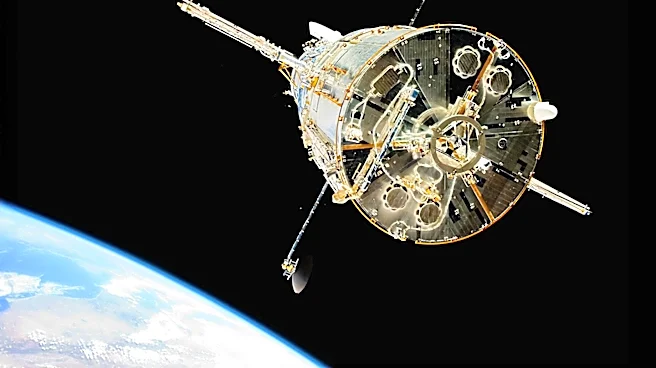
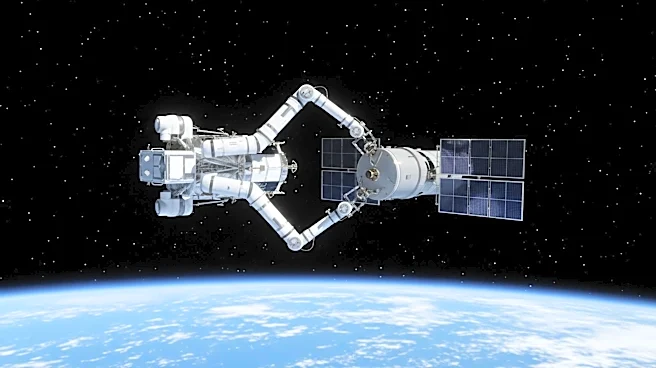
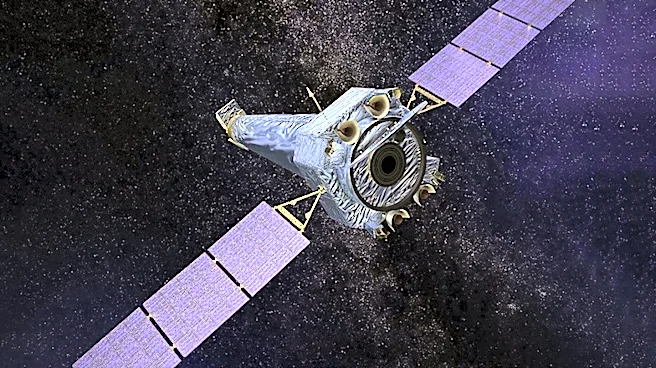
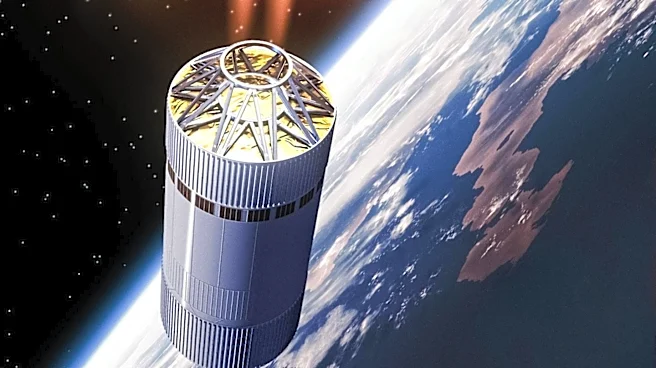
NASA has successfully launched the Swift Boost mission to save the Neil Gehrels Swift Observatory from a decaying orbit. The mission, executed by Katalyst Space Technologies, involves the deployment of the LINK spacecraft, which will use robotic arms
to capture and stabilize the Swift Observatory. The observatory, launched in 2004, has been instrumental in detecting gamma-ray bursts, but increased solar activity has accelerated its descent towards Earth. The LINK spacecraft was launched aboard Northrop Grumman’s Pegasus XL rocket and has successfully reached orbit, establishing communication and confirming its systems are operational. The mission aims to extend the observatory's operational life by boosting it back to a stable orbit.
Why It's Important?
The Swift Boost mission is crucial for maintaining the operational capabilities of the Swift Observatory, which plays a significant role in astronomical research by detecting gamma-ray bursts. These bursts provide valuable insights into cosmic events such as the collision of neutron stars and the formation of black holes. By preventing the observatory's reentry, NASA ensures the continuation of this research, which has implications for our understanding of the universe. The mission also demonstrates the potential of robotic spacecraft in satellite servicing, which could lead to more sustainable space operations by extending the life of existing satellites.
What's Next?
Following the successful launch, Katalyst Space Technologies will conduct a series of tests on the LINK spacecraft's navigation and propulsion systems. The spacecraft will then approach the Swift Observatory to determine the best point of contact for capture. Once captured, LINK will gradually raise the observatory's orbit over several months. This mission could set a precedent for future satellite servicing missions, potentially leading to more frequent use of robotic spacecraft for satellite maintenance and orbit adjustments.