








What's Happening?
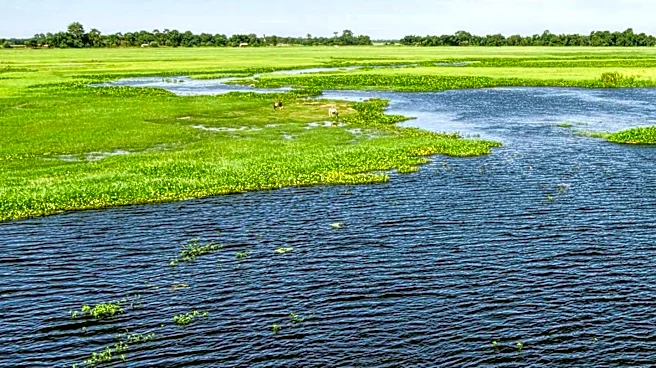
Horicon Marsh in Wisconsin was the site of significant conflicts, dubbed the 'Goose Wars,' during the 1960s and 1970s, as state and federal officials attempted to manage an exploding population of Canada geese. Naturalist Bill Volkert, who worked at the marsh
for 27 years, recounted how officials used airplanes, exploders, and airboats to drive geese away. This aggressive hazing was prompted by concerns over potential disease outbreaks due to overcrowding and extensive crop damage to local farms. The U.S. Fish and Wildlife Service also aimed to redistribute geese to provide more hunting opportunities in southern states. However, these efforts faced strong public opposition, with advocacy groups like the Citizens Natural Resources Association of Wisconsin collecting over 28,000 signatures against the hazing and dewatering of the marsh. The state of Wisconsin even sued the U.S. Fish and Wildlife Service, arguing that frightening waterfowl violated state conservation rules.
Why It's Important?
The 'Goose Wars' at Horicon Marsh represent a critical historical case study in wildlife management, illustrating the complex interplay between ecological concerns, agricultural interests, public sentiment, and governmental policy. The event highlights the challenges of managing migratory species and the unintended consequences of human intervention in natural ecosystems. The public's strong reaction and the legal battles underscore the growing environmental awareness and the emergence of conservation advocacy in the mid-20th century. This period laid groundwork for more nuanced approaches to wildlife management, emphasizing research into animal behavior and ecological balance rather than solely relying on disruptive methods. The legacy of the 'Goose Wars' continues to inform contemporary debates on wildlife conservation and the role of public engagement in policy-making.
What's Next?
While the aggressive hazing tactics of the 'Goose Wars' have ceased, Horicon Marsh remains a vital stopover for Canada geese, with 100,000 to 200,000 geese visiting each fall. Current management strategies focus on research and understanding goose behavior to achieve better dispersal across east-central Wisconsin, including other state wildlife areas like Theresa, Collins, and Eldorado. This shift reflects a long-term commitment to science-based conservation and collaborative approaches. Future efforts will likely continue to involve ecological studies, habitat management, and public education to maintain a healthy balance between wildlife populations and human activities. The marsh's designation as a 'Wetland of International Importance' in the 1990s further emphasizes its ongoing significance and the need for careful stewardship.
Beyond the Headlines
The 'Goose Wars' reveal deeper implications about human-wildlife coexistence and the evolution of environmental ethics. The initial focus on controlling nature for human benefit (crop protection, hunting) eventually gave way to a recognition of ecological complexity and the intrinsic value of wildlife. The public's emotional connection to the geese, as evidenced by large crowds attending naturalist talks and widespread opposition to hazing, demonstrates the cultural significance of iconic species. This historical episode serves as a reminder that effective conservation often requires not just scientific understanding but also public buy-in and a willingness to adapt management strategies based on both ecological data and societal values. It also highlights the enduring challenge of balancing local economic interests with broader environmental goals.