



What's Happening?
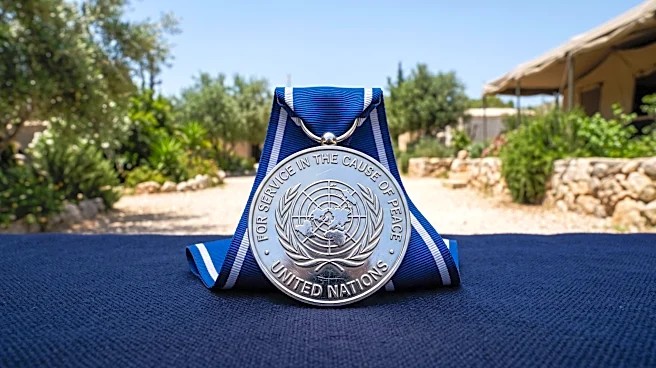
UN peacekeeping chief Jean-Pierre Lacroix has warned the Security Council about a potential security vacuum in southern Lebanon if the United Nations Interim Force in Lebanon (UNIFIL) withdraws without a replacement mechanism. Following a trip to the Middle
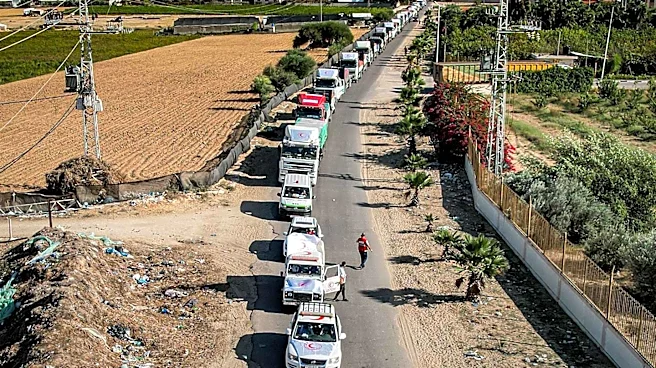
East, Lacroix reported that Lebanese officials are concerned about losing UNIFIL's third-party presence, which has historically helped prevent misunderstandings and maintain communication channels between the Lebanese army and the Israel Defense Forces. Lacroix emphasized the risk of unintentional escalation if these two forces are left without an intermediary. UNIFIL has monitored the situation along the Blue Line, reported violations, and facilitated humanitarian access for decades. Approximately 10,000 people reside between Israel's forward defensive line and the Blue Line, and UNIFIL's departure would create gaps in monitoring and humanitarian convoy coordination. While withdrawal plans are prepared, the UN has not received clear instructions from the Security Council regarding a future presence, despite Israel, backed by the United States, supporting the mission's end.
Why It's Important?
The potential withdrawal of UNIFIL carries significant implications for regional stability and U.S. foreign policy interests in the Middle East. A security vacuum in southern Lebanon could lead to increased tensions and a higher risk of conflict between Lebanon and Israel, potentially drawing in other regional actors. This instability could undermine broader U.S. efforts to promote peace and security in the Middle East. The absence of a neutral third party to mediate disputes and maintain communication channels could lead to miscalculations and unintended escalations, jeopardizing civilian populations and humanitarian access. Furthermore, the U.S. backing of Israel's stance on ending the mission places a greater responsibility on Washington to ensure that any transition does not destabilize an already volatile region, potentially requiring increased diplomatic engagement or alternative security arrangements.
What's Next?
The immediate next step involves the UN Security Council determining the future of UNIFIL and whether a replacement mechanism will be established. Lacroix's warning puts pressure on member states to address the potential security vacuum. Stakeholders, including Lebanon, Israel, and the United States, will likely engage in diplomatic discussions to find a viable solution. The U.S., given its support for ending the mission, may need to play a more active role in brokering a new arrangement or providing assurances for regional stability. Without a clear resolution, the withdrawal could proceed, leading to increased uncertainty and potential for conflict. Humanitarian organizations will also need to prepare for challenges in accessing vulnerable populations if UNIFIL's coordination role diminishes.
Beyond the Headlines
The situation in southern Lebanon highlights the complex interplay of international peacekeeping, regional security dynamics, and geopolitical interests. The potential withdrawal of UNIFIL underscores a broader trend of re-evaluating peacekeeping missions and their effectiveness. It also brings to the forefront the challenge of transitioning from international oversight to local security arrangements in conflict-prone areas. The ethical dimension involves ensuring the protection of civilian populations who rely on UNIFIL for stability and humanitarian access. Legally, the Security Council's decision will set a precedent for how such transitions are managed. Culturally, the absence of a neutral buffer could exacerbate existing mistrust between communities on both sides of the Blue Line, potentially reigniting historical grievances and making future reconciliation efforts more difficult. The long-term shift could see a more militarized border region, increasing the risk of localized conflicts escalating into broader regional confrontations.