
What's Happening?
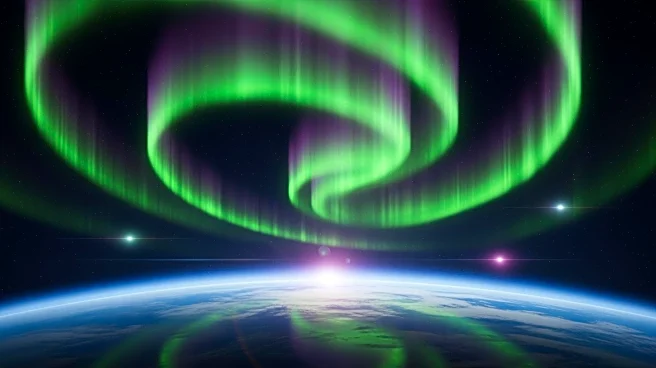
A significant solar event has led to intensified aurora displays, captured in stunning images from both space and Earth. A Russian cosmonaut aboard the International Space Station (ISS) documented the phenomenon,
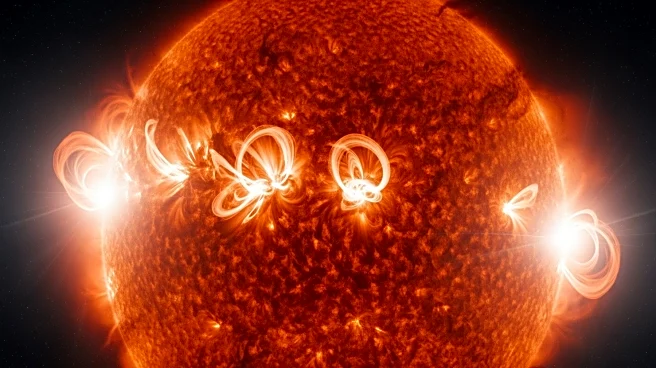
showcasing vibrant red and green lights over the Earth's surface. This visual spectacle was the result of a coronal mass ejection (CME), a massive burst of solar material and magnetic fields from the Sun's outer atmosphere. The CME, which occurred on a Sunday, reached Earth by Monday evening, resulting in a severe G4 geomagnetic storm. This storm significantly enhanced the aurora lights, making them visible in various parts of the world. Photographers globally took advantage of this event, capturing breathtaking images of the auroras.
Why It's Important?
The occurrence of such a powerful geomagnetic storm highlights the dynamic nature of space weather and its potential impacts on Earth. These storms can affect satellite operations, GPS systems, and power grids, posing challenges for technology-dependent societies. The intensified auroras serve as a reminder of the Sun's influence on our planet, emphasizing the need for continued monitoring and research in space weather. Understanding these phenomena is crucial for preparing and mitigating potential disruptions to critical infrastructure. Additionally, the event provides an opportunity for scientific study, contributing to our knowledge of solar activity and its interactions with Earth's magnetic field.
What's Next?
As solar activity continues, scientists and space weather agencies will monitor the Sun for further CMEs and geomagnetic storms. This ongoing observation is vital for predicting future events and minimizing their impact on Earth. The data collected from this recent storm will be analyzed to improve forecasting models and enhance our understanding of solar-terrestrial interactions. Stakeholders, including satellite operators and power companies, may use this information to develop strategies for protecting their assets from space weather-related disruptions.