





What's Happening?
The U.S. Senate has unanimously passed legislation aimed at amending the Clean Air Act (CAA) to facilitate prescribed burns, a key tool in preventing larger, uncontrolled wildfires. Under current law, states face administrative burdens in proving that
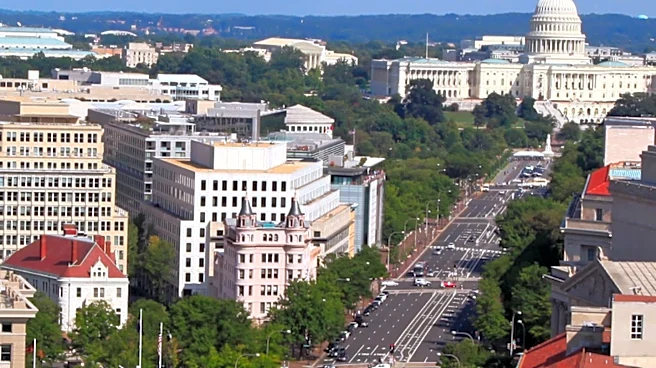
particulate matter pollution from controlled burns qualifies as an 'exceptional event' and does not count towards air quality non-compliance. Senator John Curtis, R-Utah, the bill's lead sponsor, emphasized that prescribed burns are effective in reducing hazardous fuels. The measure requires the Environmental Protection Agency (EPA) to revise regulations, making it easier for states to demonstrate that a prescribed fire is an exceptional event. This legislative push gained momentum after smoke from western U.S. and Canadian wildfires impacted Washington D.C., highlighting the national threat.
Why It's Important?
This legislation is crucial for enhancing wildfire prevention efforts across the U.S., particularly in states prone to severe blazes. By easing regulatory hurdles, states can more readily implement prescribed burns, which are scientifically proven to reduce fuel loads and mitigate the intensity of future wildfires. This directly impacts public safety, property protection, and the health of ecosystems. The current administrative burden discourages states from utilizing this preventative measure, leading to an increased risk of catastrophic fires. The bill also includes a provision for a grant program to address wildfire smoke hazards in community buildings, including schools, which is vital for protecting vulnerable populations from the health impacts of smoke pollution. This move signifies a bipartisan recognition of the escalating wildfire crisis and the need for proactive management strategies.
What's Next?
The Senate-passed bill now faces negotiations with the House of Representatives, which previously passed a competing bill in April. The House version, introduced by Representative Gabe Evans, R-Colo., also sought to change how prescribed burns are treated under the CAA but included broader exemptions for weather events, which many Democrats opposed as a potential loophole. The differing approaches will require reconciliation between the two chambers to produce a unified piece of legislation. If a compromise is reached and the bill becomes law, the EPA will be mandated to propose revisions to its regulations, which would then streamline the process for states to conduct prescribed burns without fear of CAA penalties. This legislative action is expected to lead to an increase in the use of prescribed burns as a wildfire management strategy.
Beyond the Headlines
The legislative effort to ease restrictions on prescribed burns reflects a broader shift in understanding and managing wildfires. Historically, fire suppression was the dominant strategy, but scientific consensus now emphasizes the ecological necessity of fire for many landscapes. This bill acknowledges that controlled burns, while temporarily increasing air pollution, are a critical 'ounce of prevention' against far more damaging and polluting uncontrolled wildfires. The debate over exemptions for weather events also highlights the tension between environmental protection and practical land management in the face of climate change. This legislation could set a precedent for how federal regulations adapt to evolving environmental challenges, balancing immediate impacts with long-term ecological and public safety benefits. It also underscores the growing recognition of the interconnectedness of climate, land use, and public health.