





What's Happening?
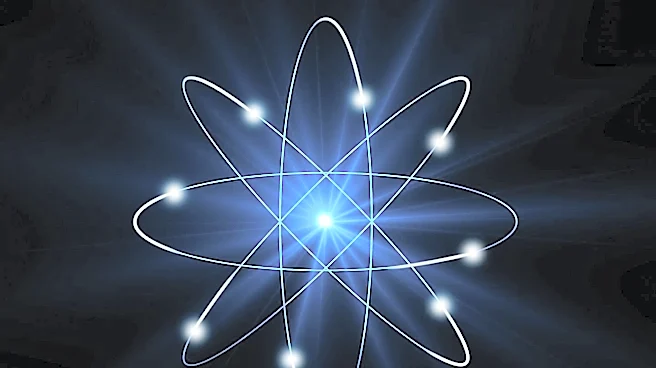
Physicists have pinpointed the ideal location within a crystal lattice for a thorium atom to construct an ultra-accurate nuclear clock. This development, detailed in a new study in Science, focuses on the isotope thorium-229, which is unique because its
nuclear transition can be triggered by an ultraviolet laser, unlike most atoms that would require a gamma-ray laser, a technology not yet available. Researchers, led by Thorsten Schumm at the Vienna University of Technology, have spent 15 years developing a method to grow solid calcium fluoride crystals doped with thorium-229. Their latest work involved shining a custom-built ultraviolet laser at varying frequencies onto these crystals to observe how thorium atoms respond. They discovered that thorium atoms can occupy four distinct sites within the crystal lattice. Three of these sites exhibit uneven electric fields, indicated by their emission of light at multiple wavelengths, which would negatively impact the clock's timing accuracy. However, the fourth site responds to only one wavelength, signifying an even electric field, making it perfect for building a precise nuclear clock. This finding is crucial for advancing nuclear clock technology.
Why It's Important?
This breakthrough is significant for the future of timekeeping and various U.S. industries that rely on extremely precise timing. Current atomic clocks, while highly accurate, are delicate and require extensive laboratory setups to prevent interference. Nuclear clocks, by tracking energy flips within an atom's nucleus rather than its electrons, promise up to 10 times greater precision and inherent shielding from external interference. The ability to embed thorium-229 in a crystal makes these clocks more robust and potentially miniaturizable. Such advancements could revolutionize fields like navigation, telecommunications, and data centers, where even minute timing discrepancies can have substantial consequences. For instance, more accurate clocks could enhance the synchronization of banking transactions, improve the resilience of communication networks against disruptions, and refine the precision of GPS systems. The U.S. stands to gain from this technology by potentially leading in the development and application of these next-generation timekeeping devices, offering strategic advantages in defense, scientific research, and critical infrastructure.
What's Next?
Following this discovery, researchers have already begun building early prototypes of these new nuclear clocks. Schumm's team has also patented a method for constructing a nuclear clock that could fit on a small chip, indicating a clear path toward miniaturization. The immediate goal is to transition these clocks from lab-sized setups to shoebox-sized devices, which could then be integrated into applications such as data center server racks. This miniaturization is critical for broader adoption and practical use outside of specialized laboratories. Another team in China has also demonstrated a prototype nuclear clock with comparable results, suggesting a global race in this field. While Schumm refrains from providing a specific timeline for surpassing the best atomic clocks, he anticipates that their current prototypes will achieve at least three orders of magnitude greater precision by the end of the year. The next steps involve further refining the crystal growth process, optimizing the laser triggering mechanisms, and developing robust, compact designs for widespread deployment.
Beyond the Headlines
The development of ultra-accurate nuclear clocks has profound implications beyond mere timekeeping. Ethically, the pursuit of such precision raises questions about the ultimate limits of measurement and our understanding of fundamental physics. Legally, the enhanced accuracy could necessitate new standards for time synchronization in global financial markets and critical infrastructure, potentially leading to international agreements on timekeeping protocols. Culturally, the ability to measure time with unprecedented precision could influence scientific paradigms, enabling new experiments in quantum mechanics and astrophysics that require extremely stable time references. The long-term shift could see a move away from satellite-based timing systems, which are vulnerable to space weather and geopolitical disruptions, towards more resilient, terrestrial nuclear clocks. This could fundamentally alter how various sectors, from defense to finance, manage and rely on time, fostering a new era of precision and autonomy in critical operations.