



What's Happening?
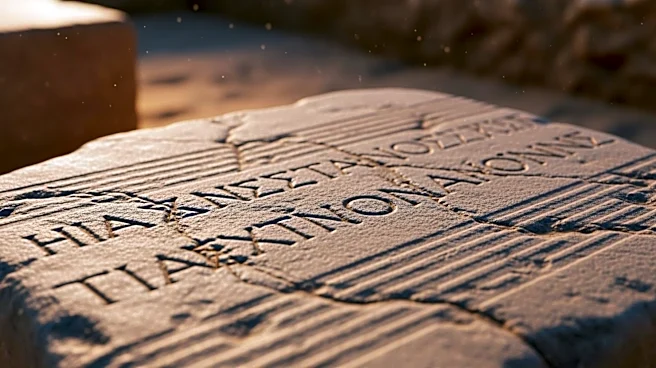
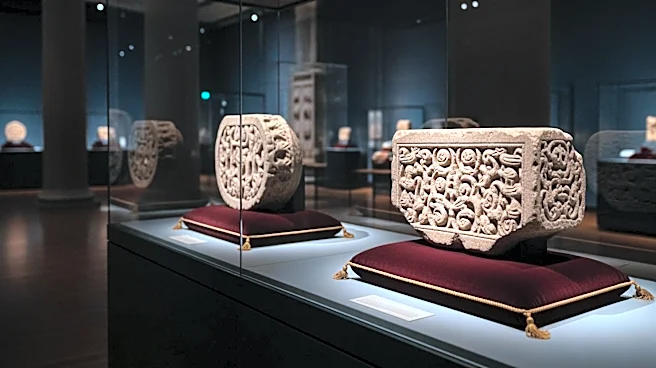
A Greek inscription discovered beneath the Great Mosque of Homs in Syria is reigniting discussions about the location of the ancient Temple of the Sun. This temple was historically linked to Elagabalus, a high priest who became a Roman emperor in the third
century AD. The mosque, known for its unique oval design, is believed to have been built over a church dedicated to St. John the Baptist, which may have replaced an earlier pagan temple. The inscription, found during restoration work, could provide evidence that the mosque stands on the remains of the Temple of Elagabalus. Dr. Maamoun Saleh Abdulkarim, an archaeology professor, suggests the inscription may help trace the origins of a site that has served as a place of worship across multiple religions over time.
Why It's Important?
The discovery of the inscription is significant as it may confirm the historical layering of religious sites in Homs, illustrating a gradual transition from paganism to Christianity and then Islam. This finding could reshape the understanding of religious transformations in the region, highlighting a continuity of worship practices rather than abrupt changes. The research underscores the importance of interdisciplinary collaboration in archaeology, epigraphy, and heritage conservation, offering insights into the cultural and religious history of the Middle East.
What's Next?
Further analysis of the inscription is expected to provide more clarity on the historical significance of the site. Researchers will continue to explore the connection between the mosque and earlier religious structures, potentially leading to new discoveries about the religious and cultural history of Emesa (ancient Homs). The study may also influence future archaeological and conservation efforts in the region.
Beyond the Headlines
The study highlights a broader pattern of cultural adaptation in Emesa, where religious change was a negotiation between old beliefs and emerging faiths. This continuity reflects a remarkable preservation of cultural identity over nearly two thousand years, with the site serving as a temple, church, and mosque at different times.