







What's Happening?
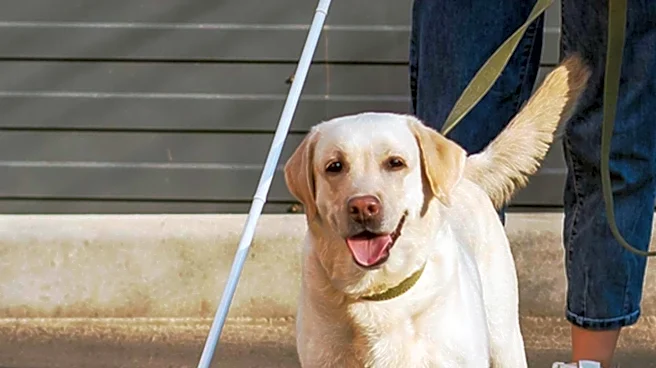
Veteran James Poggi, a former Marine Corps aviation serviceman, is regaining his independence with the help of his service dog, Teddy, a Goldendoodle. Poggi's military service led to significant physical challenges, including five back surgeries and a below-the-knee
amputation, as well as spinal meningitis. These injuries left him reliant on mobility devices and facing emotional tolls. Teddy assists Poggi with daily tasks such as retrieving dropped items and his cell phone, and has also brought back a sense of joy. Poggi and Teddy trained at Dog Training Elite St. Louis, which prepares service animals for real-world scenarios. A private donor grant is now helping 10 veterans or active military members cover 30% of their service dog training costs.
Why It's Important?
This story highlights the profound impact service dogs have on the lives of veterans facing physical and emotional challenges stemming from their military service. For veterans like James Poggi, a service dog can be instrumental in restoring independence, improving quality of life, and mitigating symptoms of conditions like PTSD, as supported by a 2024 study. The assistance provided by these dogs goes beyond physical tasks, offering companionship and emotional support that can be crucial for mental well-being. The private donor grant further underscores the community's recognition of this need, addressing a gap in support, as the VA currently does not provide service dogs for mental health conditions. This initiative is vital for enabling more veterans to access these life-changing companions, fostering their reintegration and well-being.
What's Next?
James Poggi and Teddy are set to return to their routine, with Poggi resuming his role as a school crossing guard in Mascoutah, where Teddy will accompany him daily. The private donor grant will continue to facilitate service dog training for 10 additional veterans or active military members, covering a significant portion of their costs. This initiative may inspire further philanthropic efforts or advocacy for increased governmental support for service dogs for veterans. Discussions around the VA's policies regarding service dogs for mental health conditions are likely to continue, potentially leading to future changes in how these vital resources are provided to those who have served.
Beyond the Headlines
The narrative of James Poggi and Teddy delves into the deeper societal responsibility to care for veterans who have sustained injuries in service. It highlights the often-overlooked long-term consequences of military duty, extending beyond immediate physical wounds to encompass chronic pain, mobility issues, and psychological trauma. The role of service animals in this context transcends mere assistance; they become integral partners in rehabilitation and emotional healing, fostering a renewed sense of purpose and connection. This story also implicitly critiques existing support systems, particularly the limitations of VA services regarding mental health service dogs, prompting a broader conversation about holistic veteran care. It underscores the power of the human-animal bond in therapeutic settings and the importance of community-driven solutions to address critical needs.