






What's Happening?
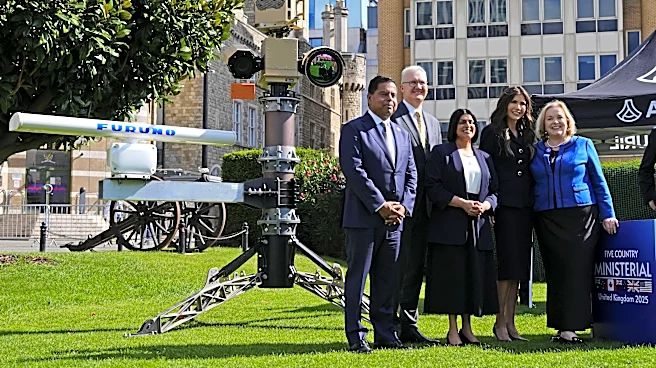
The UK Special Representative for Climate Security (SREP) is set to support a joint threat assessment and scenario exercise with the Five Eyes intelligence alliance. This initiative, involving the Joint Intelligence Organisation, Met Office, and Defence
Science and Technology Lab (DSTL), will focus on the impacts of near-term strategic risks such as food systems, water stress, melting ice/permafrost, and critical supply chains. The exercise aims to understand how climate and nature impacts could lead to cascading security consequences across multiple countries and regions. The SREP's role is to champion UK leadership on climate and nature security, build international influence, and integrate climate and nature security threats into national security and foreign policy decision-making. This involves working with various government departments to strengthen the UK's national security, foreign policy, and economic risk frameworks, and to enhance cross-Whitehall decision-making.
Why It's Important?
This collaboration within the Five Eyes alliance underscores a growing recognition among major intelligence partners of climate change as a direct national security threat. For the U.S., as a member of Five Eyes, this joint assessment means enhanced intelligence sharing and a more comprehensive understanding of climate-related risks that could impact its own security and economic interests. The focus on cascading cross-border risks highlights the interconnectedness of global systems, where climate events in one region can have far-reaching implications for international stability, supply chains, and resource availability. This proactive approach aims to move beyond managing short-term crises to strategically preparing for long-term climate-induced security challenges, potentially influencing future defense strategies, foreign policy, and resource allocation within the U.S. and its allies.
What's Next?
The SREP will continue to drive mechanisms to inform the UK security architecture of emerging threats and embed key risks into foreign policy and security agendas. This includes shaping cross-government crisis response planning for climate-related shocks, both domestic and those cascading across borders, potentially through wargaming exercises. The initiative also aims to mobilize a small grouping of National Security Advisers, intelligence chiefs, defense establishments, and industry leaders from key countries to develop an action plan addressing common climate risks. This suggests a future where climate security considerations will be more deeply integrated into international security dialogues and operational planning, potentially leading to new joint initiatives and coordinated responses among Five Eyes nations and other partners.
Beyond the Headlines
This development signifies a deeper integration of environmental science and intelligence operations, moving climate change from primarily an environmental issue to a core component of national security. The emphasis on 'cascading security consequences' suggests a shift towards understanding complex, non-linear impacts of climate change, which could challenge traditional security paradigms. Ethically, it raises questions about resource allocation and the responsibility of developed nations in addressing climate impacts that disproportionately affect vulnerable regions, potentially leading to migration and instability. Legally, it could prompt new international agreements or frameworks for managing climate-induced security crises. Culturally, it reflects a growing awareness that national security in the 21st century extends beyond conventional military threats to include environmental stability and resource resilience.