
What's Happening?
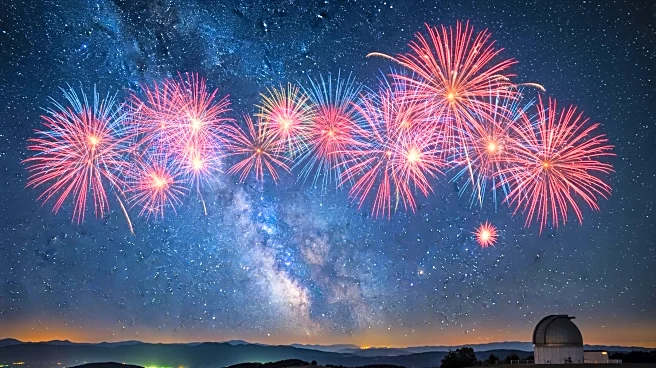
On New Year's Eve 2025, skywatchers will be treated to a celestial display featuring constellations, planets, and a waxing gibbous moon. The moon will be visible in the constellation Taurus, accompanied
by the Pleiades star cluster. Below the moon, the constellation Orion will be visible, with Jupiter shining brightly in the constellation Gemini near the stars Castor and Pollux. Saturn will also be visible in the southern sky, with its rings appearing edge-on to Earth. As the night progresses, Saturn will set, leaving the moon and Jupiter high in the sky. The North Star, Polaris, and the Big Dipper will also be visible, providing a stunning backdrop for the transition into the new year.
Why It's Important?
This celestial event offers a unique opportunity for both amateur and seasoned astronomers to observe and appreciate the night sky. The visibility of major planets like Jupiter and Saturn, along with prominent constellations, provides an educational experience and a chance to engage with astronomy. Such events can inspire interest in space science and foster a greater appreciation for the universe. Additionally, the alignment of these celestial bodies on a significant date like New Year's Eve adds a special touch to the celebrations, encouraging people to look beyond earthly festivities and contemplate the vastness of space.
What's Next?
As 2026 begins, the orientation of Saturn's rings will gradually change, offering new viewing opportunities for astronomers. The rings will open up, revealing more of their structure, including the Cassini Division. This change will be of interest to those tracking planetary movements and studying Saturn's features. The new year will also bring more stargazing events, encouraging enthusiasts to continue exploring the night sky. With advancements in telescope technology, such as the Celestron NexStar 8SE, observers can expect enhanced views of celestial phenomena throughout the year.