







What's Happening?
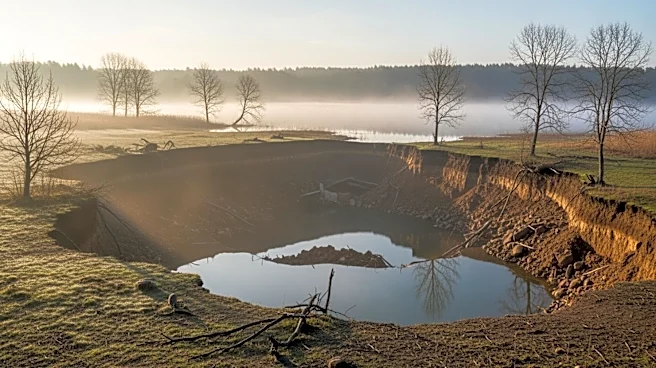
Lake Rouge in Quebec, Canada, has completely drained after its bank collapsed in a landslide-like event. The lake, known for its emoji-like appearance from above, was a significant resource for the Cree First Nation of Waswanipi, who used it for hunting
and fishing. The collapse led to an outburst flood, with the lake's water traveling approximately 6 miles to Doda Lake, turning it into a muddy expanse. The event is attributed to a combination of factors, including recent wildfires that destabilized the soil and logging activities that accelerated snowmelt. The region's geological history, having been covered by ice sheets until 20,000 years ago, also contributed to the landscape's vulnerability.
Why It's Important?
The sudden disappearance of Lake Rouge highlights the fragility of certain ecosystems and the potential for rapid environmental changes. This event underscores the impact of human activities, such as logging and land management, on natural landscapes. It also raises concerns about the resilience of ecosystems in the face of climate change and other environmental stressors. The loss of the lake affects the local Indigenous community, disrupting traditional practices and livelihoods. This incident serves as a reminder of the interconnectedness of natural and human systems and the need for sustainable environmental management.
What's Next?
Researchers and local authorities will likely conduct further investigations to understand the full impact of the lake's disappearance and to develop strategies to prevent similar events in the future. There may be efforts to restore the affected ecosystems and support the Cree First Nation in adapting to the changes. The incident could prompt broader discussions on land use policies and the importance of preserving natural landscapes. Monitoring and research will continue to assess the long-term effects on the region's biodiversity and water systems.