
What's Happening?
In the Netherlands, researchers from Wageningen University & Research (WUR) are advocating for a transformation in agricultural practices to address environmental and social costs associated with current
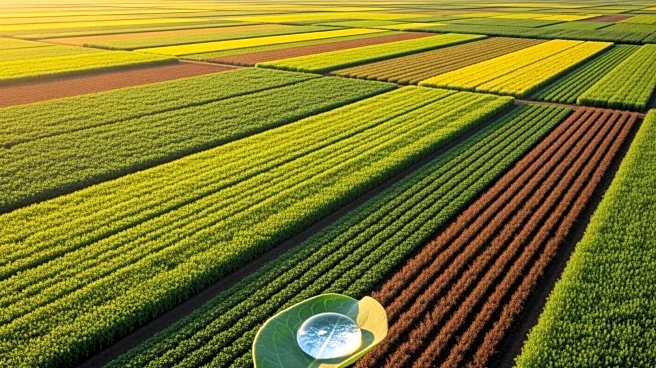
systems. The country, despite its small size, is the world's second-largest agricultural exporter by value. However, this productivity has led to ecological and human welfare concerns. Researchers Evelien de Olde and Dr. Imke de Boer propose a shift towards circular food systems that prioritize natural processes and animal welfare. Their vision includes reducing the use of arable land for livestock feed and promoting intercropping to enhance soil health and biodiversity. This approach aims to create more sustainable food systems by reconnecting consumers with the origins of their food and fostering conscious consumption.
Why It's Important?
The proposed changes in Dutch agriculture have significant implications for global food systems. By adopting circular food systems, the Netherlands could set a precedent for sustainable agricultural practices that balance productivity with ecological and social well-being. This shift could lead to more efficient land use, reduced reliance on pesticides, and improved animal welfare. The focus on reconnecting consumers with food origins may also drive changes in consumer behavior, encouraging more sustainable consumption patterns. As a major agricultural exporter, the Netherlands' adoption of these practices could influence international agricultural policies and inspire similar initiatives worldwide.
Beyond the Headlines
The movement towards sustainable agriculture in the Netherlands highlights broader ethical and cultural shifts in how societies view food production. Emphasizing animal welfare and ecological balance reflects a growing recognition of the interconnectedness of human and environmental health. This approach challenges traditional economic models that prioritize efficiency over sustainability, suggesting a need for systemic change in how food systems are structured. The initiative also underscores the importance of education and community involvement in fostering a deeper understanding of food production and its impacts, potentially leading to long-term cultural shifts in food consumption and production.