
What's Happening?
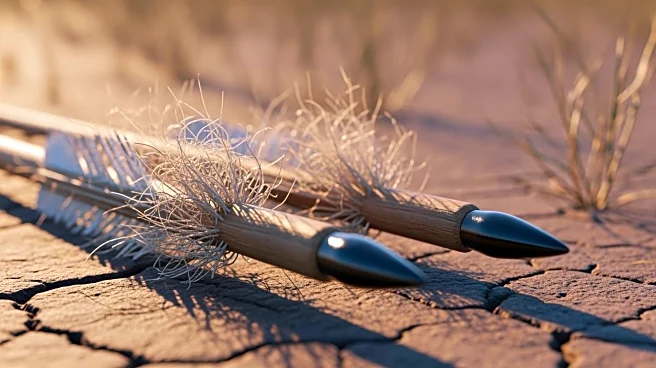
Archaeologists have discovered 60,000-year-old quartz arrowheads in South Africa that show traces of plant-based poison, making them the oldest known evidence of poison use on projectiles. The arrowheads were
found at the Umhlatuzana Rock Shelter site and contain compounds from the Boophone disticha plant, known for its toxic properties. This discovery suggests that early humans employed complex hunting strategies involving poison, pushing back the timeline for such practices into the Pleistocene era. The use of poison in hunting reflects advanced cognitive abilities and adaptation to environmental challenges.
Why It's Important?
The discovery of these ancient poison arrows provides valuable insights into the cognitive and cultural development of early humans. It highlights the sophistication of prehistoric hunting techniques and the ability to utilize natural resources for survival. This finding contributes to our understanding of human evolution and the development of technology. It also underscores the importance of archaeological research in uncovering the complexities of early human societies. The use of poison in hunting is a testament to the ingenuity and adaptability of our ancestors, offering a glimpse into the challenges they faced and overcame.