



What's Happening?
A recent study published in the journal Science of The Total Environment suggests that achieving net-zero carbon emissions in Scotland's livestock sector by 2050 will require significant changes in land use, including extensive tree planting. Researchers
from The James Hutton Institute propose planting approximately 30,000 hectares of new woodland and agroforestry annually from 2020 to 2050. This afforestation effort aims to improve biodiversity and aid the ecosystem while offsetting carbon emissions. However, the study indicates that the carbon offset from tree planting will decline over time as forests mature, necessitating additional measures to balance emissions. The research underscores the need for a multifaceted approach that considers biodiversity, livestock livelihoods, and alternative emission mitigation strategies.
Why It's Important?
The study's findings are significant as they highlight the challenges and complexities involved in achieving net-zero emissions in the livestock sector, a critical component of Scotland's economy. The proposed afforestation strategy aligns with the Paris Agreement on climate change, emphasizing the global commitment to reducing greenhouse gas emissions. The research also points to the need for innovative solutions that balance environmental goals with economic and social considerations, such as maintaining livestock livelihoods. The implications extend beyond Scotland, offering insights into sustainable land use practices that could be applied in other regions facing similar challenges.
What's Next?
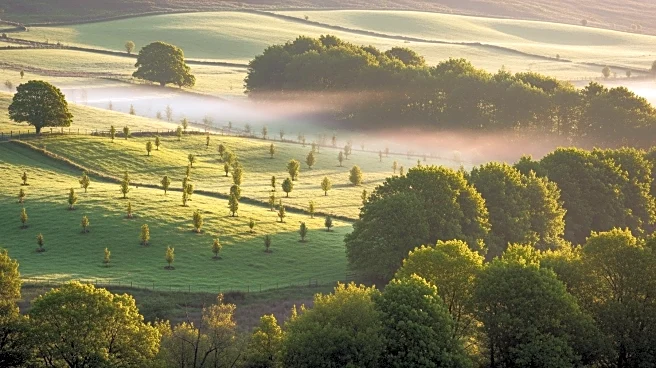
The James Hutton Institute is testing the study's recommendations at its Glensaugh Climate Positive Farming Initiative, where they have doubled the tree-planted area without reducing livestock numbers. This initiative aims to explore the feasibility of integrating agroforestry systems that allow animals to graze between spaced trees. The study suggests that achieving net-zero emissions will require ongoing research and adaptation of land use strategies, potentially influencing policy decisions and land management practices in Scotland and beyond.