








What's Happening?
Flights at Boston Logan International Airport resumed early Monday following an overnight ground stop due to issues with the airport's aircraft fueling system. The Federal Aviation Administration (FAA) had issued the ground stop on Sunday night, which
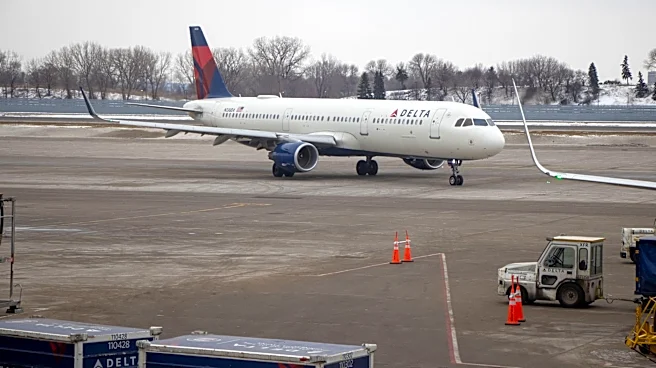
led to delays and cancellations for several departing flights. The ground stop was lifted around 11:30 p.m. Passengers, particularly those flying with Delta Air Lines, faced long lines as they attempted to rebook their canceled flights. Many travelers were forced to spend an additional night in Boston, as airlines did not cover hotel costs due to the issue being airport-related. The problem was linked to BOSfuel, the consortium responsible for managing the airport's jet fuel system. The exact cause of the fueling issue remains unclear, and BOSfuel has not yet provided further information. This incident follows a similar fuel system outage at Logan Airport in 2024, which required a restart of the airport's fuel farm system.
Why It's Important?
The disruption at Boston Logan International Airport highlights the critical role of infrastructure reliability in air travel. Such incidents can have significant ripple effects, causing inconvenience to passengers and potential financial losses for airlines due to delays and cancellations. The situation underscores the importance of maintaining and upgrading airport systems to prevent operational disruptions. For travelers, unexpected delays can lead to additional expenses and logistical challenges, particularly when airlines do not cover costs for issues deemed outside their control. The incident also raises questions about the resilience of airport fuel systems and the need for contingency plans to manage similar occurrences in the future.
What's Next?
Travelers affected by the disruption are advised to check with their airlines for updated flight statuses as some delays and cancellations continue to be reported. The airport and BOSfuel are likely to investigate the cause of the fueling issue to prevent future occurrences. This may involve reviewing and potentially upgrading the fuel system infrastructure. Stakeholders, including airlines and airport authorities, may also consider revising policies regarding passenger compensation and support during such disruptions. The incident could prompt broader discussions on infrastructure investment and emergency preparedness in the aviation sector.