









What's Happening?
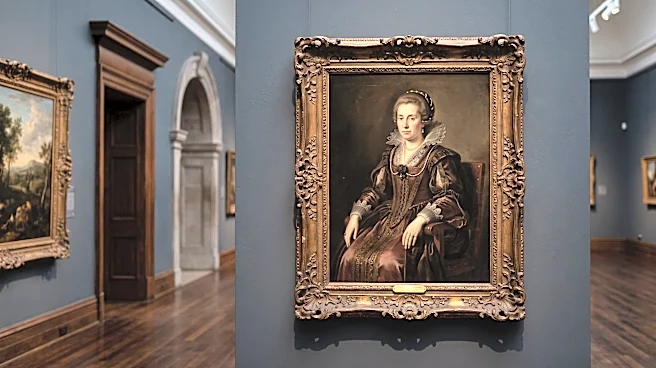
An Argentine court has approved the return of the 17th-century painting 'Portrait of a Lady,' which was looted by Nazis during the Holocaust, to Marei von Saher, the sole heir of Dutch-Jewish art dealer Jacques Goudstikker. The decision stems from an
agreement with Patricia Kadgien, daughter of fugitive Nazi official Friedrich Kadgien, and her husband, Juan Carlos Cortegoso. The couple was charged last year with aggravated concealment after the painting was discovered in their home in Mar del Plata, Argentina, following an investigation by the Dutch newspaper Algemeen Dagblad. Under the agreement, Kadgien and Cortegoso will relinquish their claim to the artwork and avoid a criminal trial, instead facing two years of court supervision and making payments to a local children's hospital. The painting, initially attributed to Giuseppe Vittore Ghislandi, was re-identified by Argentina's National Academy of Fine Arts as a work by Giacomo Antonio Melchiorre Ceruti and is valued at approximately $290,000. Von Saher, who resides in Connecticut, has agreed for the painting to be exhibited in Argentina before its transfer to her possession.
Why It's Important?
This ruling marks a significant victory in the ongoing global effort to repatriate art looted during World War II, particularly for Jewish families whose cultural heritage was systematically plundered by the Nazi regime. For Marei von Saher, who has dedicated decades to recovering her family's stolen artworks, this represents a tangible restoration of justice and a connection to her family's past. The case highlights the enduring legacy of Nazi-era crimes and the complex legal and ethical challenges involved in tracing and reclaiming stolen cultural property across international borders. It also underscores the importance of investigative journalism and international cooperation in bringing such cases to light and achieving restitution. The agreement, which includes a public exhibition of the painting in Argentina, also serves to raise public awareness about the extensive looting of cultural property during the Nazi regime, contributing to historical education and remembrance.
What's Next?
Following the Argentine court's approval, the 'Portrait of a Lady' will first be exhibited in Argentina, as per Marei von Saher's agreement, before it is transferred to her in Connecticut. Patricia Kadgien and Juan Carlos Cortegoso will remain under court supervision for two years, during which they must keep authorities informed of their whereabouts and make payments to a children's hospital. Any violation of these terms could lead to the reopening of criminal proceedings against them. Authorities are also continuing investigations into other 19th-century paintings and prints seized from the Kadgien home, to determine if they too were looted during World War II. This ongoing scrutiny suggests that further restitutions or legal actions related to Nazi-looted art in Argentina could emerge.
Beyond the Headlines
The return of 'Portrait of a Lady' transcends a simple property dispute, touching upon profound ethical and historical dimensions. It underscores the moral imperative to rectify historical injustices, particularly those committed during the Holocaust, and highlights the long-term impact of such atrocities on individuals and cultural heritage. The case also brings to light the complex issue of 'aggravated concealment' and the responsibility of individuals who come into possession of looted items, even decades after the original crime. The agreement to avoid criminal trial in exchange for restitution and community service raises questions about the balance between punitive justice and restorative justice in such cases. Furthermore, the decision to exhibit the painting in Argentina before its final return emphasizes the educational and symbolic value of these artworks, transforming them from mere objects of value into powerful reminders of history and resilience.