



What's Happening?
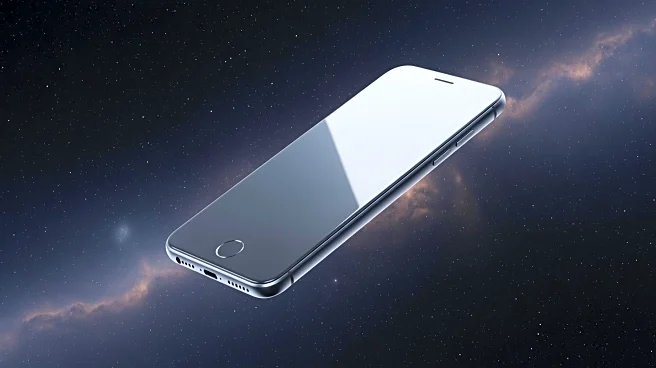
NASA has announced a significant policy change allowing astronauts to bring smartphones on space missions. This decision, revealed by NASA Administrator Jared Isaacman, applies to the upcoming Crew-12 mission to the International Space Station and the Artemis
II lunar flyby. The inclusion of smartphones is intended to help astronauts capture personal moments and share them with the public, enhancing communication and documentation capabilities. Previously, astronauts relied on agency-issued cameras and tablets. Isaacman emphasized that this move is part of a broader effort to streamline NASA's hardware approval process, which has been hindered by outdated requirements. The change highlights the gap between NASA's onboard imaging technology and consumer electronics, as astronauts have been using older cameras and tablets for communication.
Why It's Important?
This development is significant as it marks a shift in NASA's approach to technology and communication in space. By allowing smartphones, NASA is modernizing its equipment and potentially improving the efficiency of communication between astronauts and their families, as well as with the public. This change could lead to more real-time sharing of experiences from space, fostering greater public engagement and interest in space missions. Additionally, the streamlined hardware approval process could accelerate the adoption of new technologies, enhancing NASA's capabilities in scientific exploration and research.
What's Next?
The introduction of smartphones on space missions may prompt further updates to NASA's technology policies, potentially leading to the inclusion of other modern consumer electronics. This could enhance the overall experience for astronauts and improve the quality of data and imagery shared with Earth. Stakeholders, including technology companies, may see new opportunities to collaborate with NASA on developing space-compatible devices. The success of this initiative could influence other space agencies to adopt similar policies, promoting a more integrated approach to technology in space exploration.