









What's Happening?
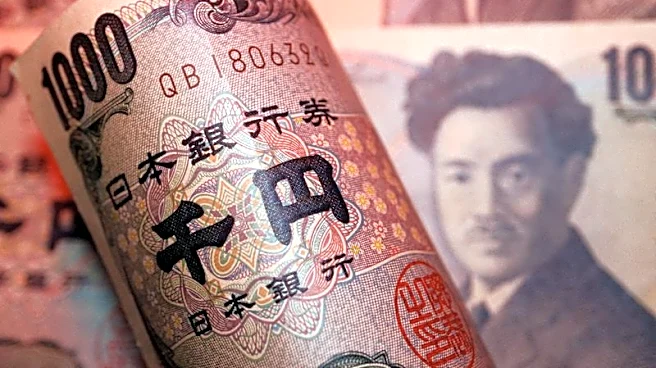
The Japanese yen is experiencing significant weakness, nearing a 40-year low, as traders remain cautious about potential intervention by Japanese authorities. This decline is occurring amidst renewed hostilities in the Gulf region, which have cast uncertainty
over global markets. The yen's depreciation is partly attributed to the strong U.S. dollar, which has gained over 0.5% against the yen this week. Despite the dollar easing slightly, it remains close to its recent peak against the yen. Japan's Economy Minister Minoru Kiuchi has stated that the government will not preemptively indicate its preferences regarding the Bank of Japan's interest rate decisions. Meanwhile, other currencies such as the euro and the British pound have shown slight gains against the dollar.
Why It's Important?
The weakening of the yen has significant implications for global financial markets and Japan's economy. A weaker yen can make Japanese exports more competitive, potentially boosting the country's trade balance. However, it also raises the cost of imports, contributing to inflationary pressures. The potential for Japanese government intervention to stabilize the yen adds uncertainty to currency markets, affecting investor sentiment. Additionally, the geopolitical tensions in the Gulf region could further impact energy prices and global inflation, influencing monetary policy decisions worldwide. The situation underscores the interconnectedness of global economies and the delicate balance central banks must maintain in their monetary policies.
What's Next?
Market participants are closely monitoring the Japanese government's response to the yen's decline. Any intervention could have immediate effects on currency markets, potentially stabilizing the yen temporarily. However, without changes in the underlying economic conditions, such as U.S. interest rates and Japan's fiscal policies, the yen may continue to face downward pressure. Traders will also be watching for developments in the Gulf region, as escalating tensions could further impact global markets. The Reserve Bank of New Zealand's recent rate hike and future tightening plans may also influence currency dynamics in the Asia-Pacific region.