

What's Happening?
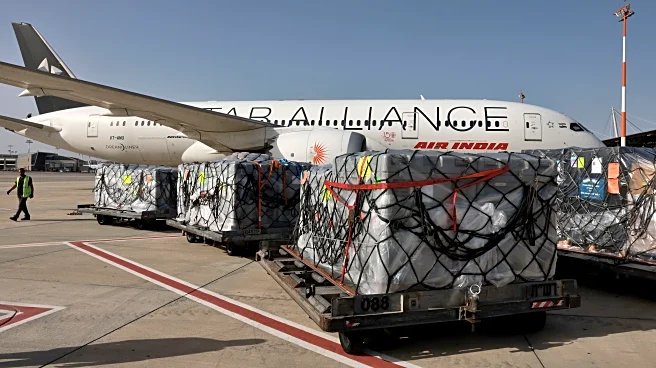
The escalating conflict involving the U.S. and Israel against Iran has severely disrupted air travel across the Middle East, leading to the closure or severe restriction of major Gulf airports such as Dubai, Doha, and Abu Dhabi. This has resulted in the cancellation
of over 21,300 flights, leaving tens of thousands of passengers stranded. The situation has forced airlines like Emirates, flydubai, and Etihad to operate limited flights primarily for repatriating stranded passengers. The conflict has also narrowed the flight corridor for long-haul flights between Europe and Asia, complicating operations for global air carriers. The U.S. Department of State has urged Americans to leave several countries in the region, and efforts are underway to secure military and charter flights for evacuation.
Why It's Important?
The disruption in air travel due to the conflict has significant implications for the global airline industry, which is still recovering from the COVID-19 pandemic. The closure of key Middle Eastern hubs affects not only passenger travel but also cargo operations, potentially resulting in billions of dollars in losses. The conflict has also led to a surge in oil prices, which could increase jet fuel costs and further strain airline finances. The situation highlights the vulnerability of global travel networks to geopolitical tensions and the potential economic impact on regions reliant on tourism and aviation.
What's Next?
Airlines are likely to face continued operational challenges as they navigate restricted airspaces and increased fuel costs. The U.S. and other governments may intensify efforts to evacuate citizens from the region, potentially using military and charter flights. The conflict's duration and intensity will play a crucial role in determining the long-term impact on the airline industry and regional economies. Airlines may need to explore alternative routes and strategies to mitigate the impact of the conflict on their operations.